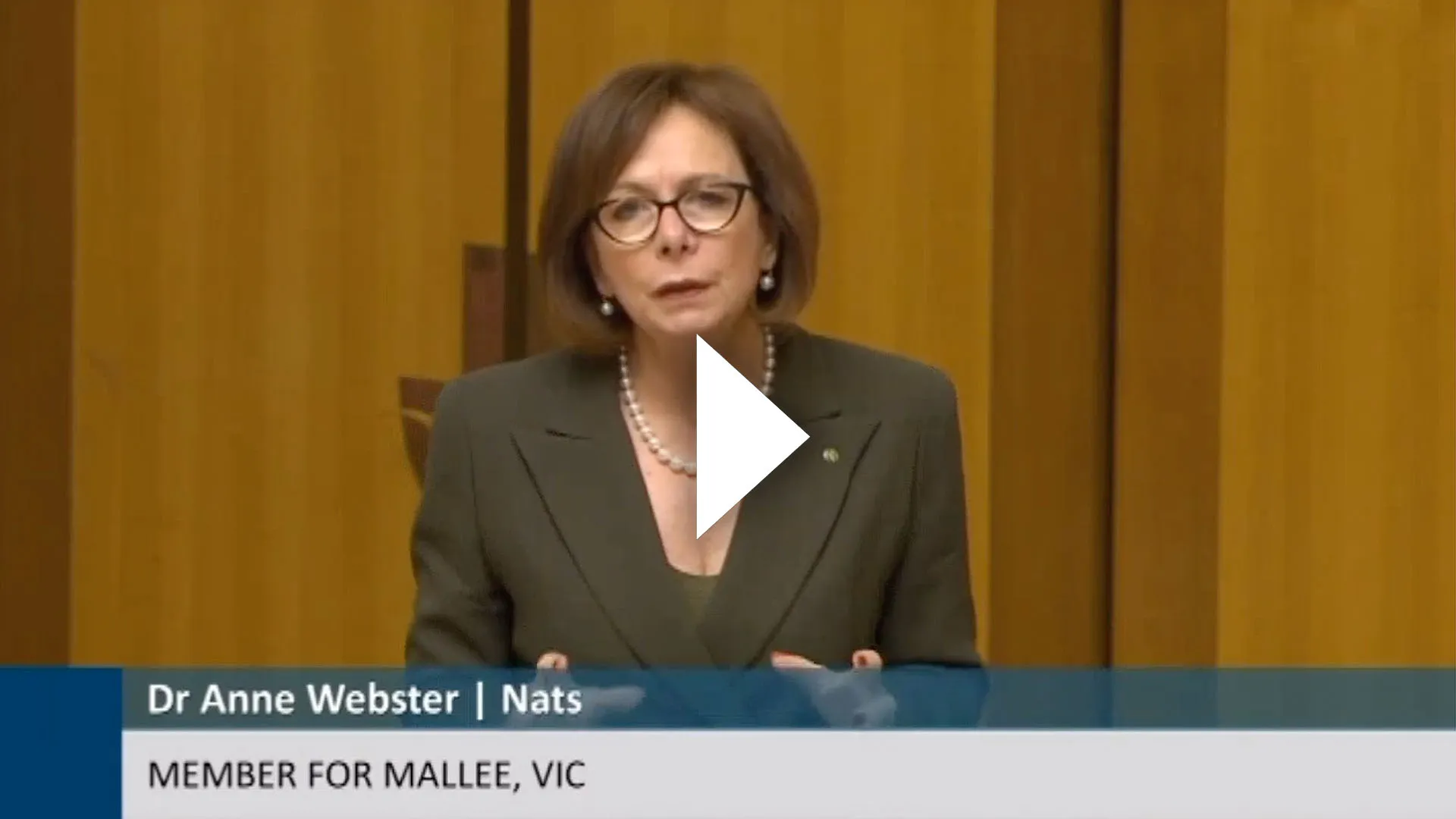

Interview with Chris Kenny, Sky News 'Kenny Report' - Thursday 2 April 2026
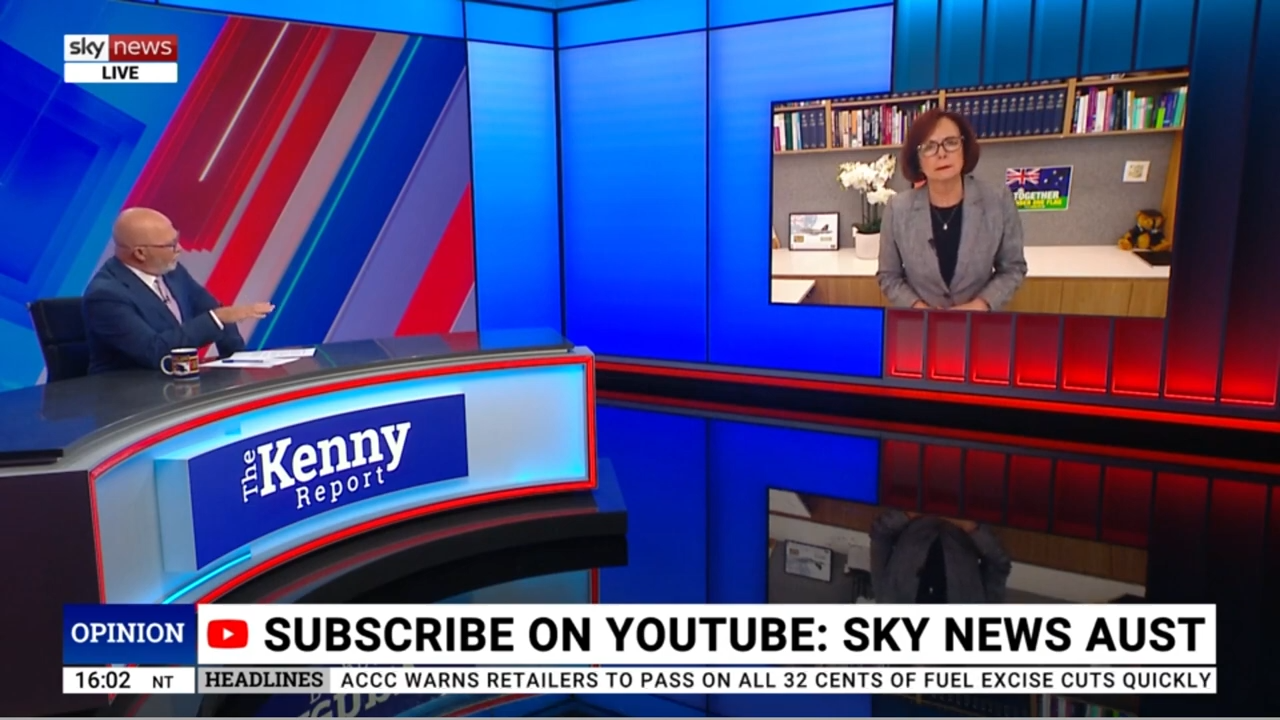
Shadow Minister for Regional Health, Shadow Minister for Regional Communications - Member for Mallee - Transcript - Sky News - Thursday 2 April 2026
DR ANNE WEBSTER MP
SHADOW MINISTER FOR REGIONAL HEALTH
SHADOW MINISTER FOR REGIONAL COMMUNICATIONS
FEDERAL MEMBER FOR MALLEE
TOPICS: fuel crisis, farmer planting decisions, rising input costs, transport costs to market, Economic Resilience Program eligibility, farm debt
Kenny
We talked about how tough this fuel crisis is for small business, it's especially hard for our farmers as well. Let's catch up with Shadow Regional Health Minister, Anne Webster, in the Victorian city of Mildura in the Sunraysia. I worked at Mildura for about three weeks, a million years ago, Anne, but good to talk to you again. I signed up with the Red Hill footy club and and was there a few weeks and then shot through. But anyway, we'll talk about that another time.
Webster
What a shame!
Kenny
Tell us about the fuel crisis now, the first question I have is about seeding right now, obviously it changes with different crops and climates around the country, but my understanding, in your neck of the woods, in the Mallee, where people are looking to sow their wheat or barley, this is the time of the year you'd be looking ... if you've got enough rain, now's the time to get it in, right? And so apart from the rain, the one thing you need is diesel.
Webster
Who knew?! That's exactly right, Chris, and in fact, we've had heavy rain events early and surprisingly, we've had our entire year annual rainfall in two days about four weeks ago. I know it's great news, but then, of course, the fuel crisis hit, and so farmers have been going, well, if I can seed the ground now, put the seed in, am I going to have fuel to harvest it later on? Because they have to have that long term perspective, obviously. And the problem is they don't have that confidence. Many of the farmers are getting their half quantity of diesel at the moment, they're not getting full quantities, so they're not sure. They're certainly paying a lot more, as everyone is, and the excise cut makes no difference to them anyway, in their business. So they've had to make decisions, do we plant wheat and barley - which require more tending, more spraying, etc, or do we plant vetch and lentils and things that are actually a lower value crop? So the problem with that is it is going to mean different harvests. If they do make that decision, it will mean different harvest and a different outcome towards the end of the year. And of course, we don't know how long this fuel crisis is going to go on for.
Kenny
Yeah, it's a really tough decision for them, because it's a matter of spending a lot of money, investing a lot of money in a potential crop. They mostly would have time on their side, though, wouldn't they? They wouldn't have to make a final decision about selling crops for another month or two?
Anne Webster
No, with the rain event, it actually brings it earlier. So, a lot of them are under pressure right now. PVC, by the way, is up 50 per cent according to Citrus Australia, and urea is up 25 per cent - if you can get it. And then, of course, in my electorate, the magnificent Mallee, I've got to say we also have a lot of horticulture. So we've got grapes being harvested, we've got citrus, and we've got farmers who are saying they don't know whether they can afford the fuel to get the citrus to Melbourne and then be able to sell it because it's too expensive, and agents are telling them we won't be able to buy it for that. So do they just let it fall off the tree and we have no fruit. This is going to hit supermarket shelves, and it's going to hit families very, very soon.
Kenny
Yeah, it's a huge problem. That's where I wanted to go with the next question. Of course, we're worried sick about all the farmers and the horticulturalists and the like, and they're all small business people effectively, and the huge problems they've got, the costs and the uncertainty. But, how certain are we that this will flow through to consumers as well, with the scarcity of some produce prices going up? And, you know even, I suppose, most of the wheat - we're looking at exports there, but, but the impact of this across the economy could be quite disastrous, couldn't it?
Anne Webster
It is - and the fuel costs of course, the Prime Minister, in all his wisdom, has said that the trucking companies can pass on that fuel cost as a levy to whoever needs to use their transport vehicles. That's great. Farmers don't have that luxury. They're price takers, as we know and so how this is going to impact them in the long term is a worry. I've had somebody write to me today and say, well, will the Economic Resilience Fund apply to us? It applies to transport and it applies to manufacturers or refiners of fuel and urea. But there's no clarity from the Prime Minister - like his speech to the nation last night - there's no clarity from the Prime Minister as to whether farmers are able to get those no-interest loans, which is what they're looking for. They may be forced into that position where they have to go deeper into debt. I spoke to one farmer, he's got a $6 million loan. Like: people don't understand how much money is on the line to run a farm!
Kenny
Unreal. Thanks for joining us. Anne, I appreciate you keeping us up to date. Have a great Easter.