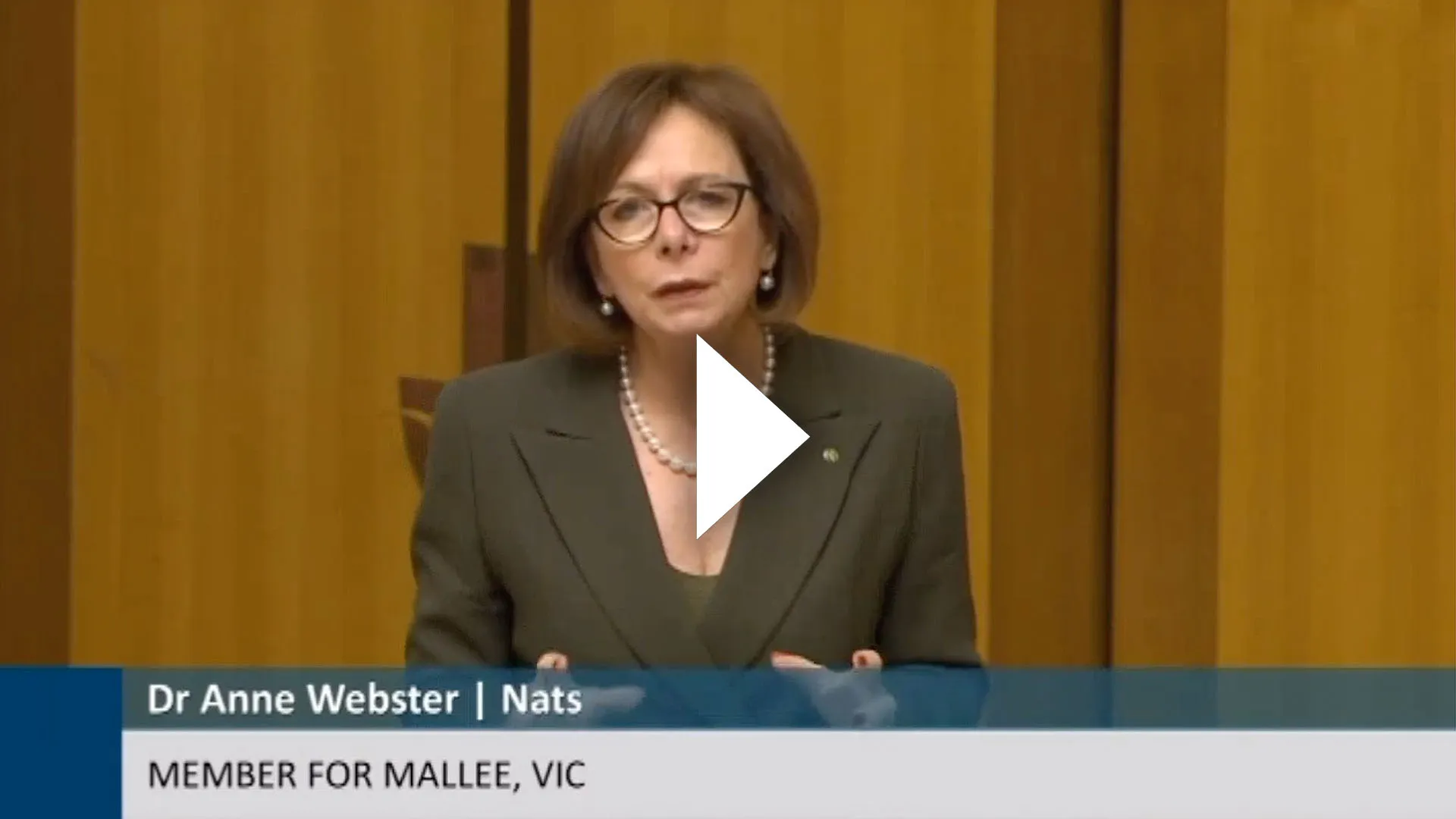

Aged Care Assessment Failures Escalate as Review Requests Surge - Media Release
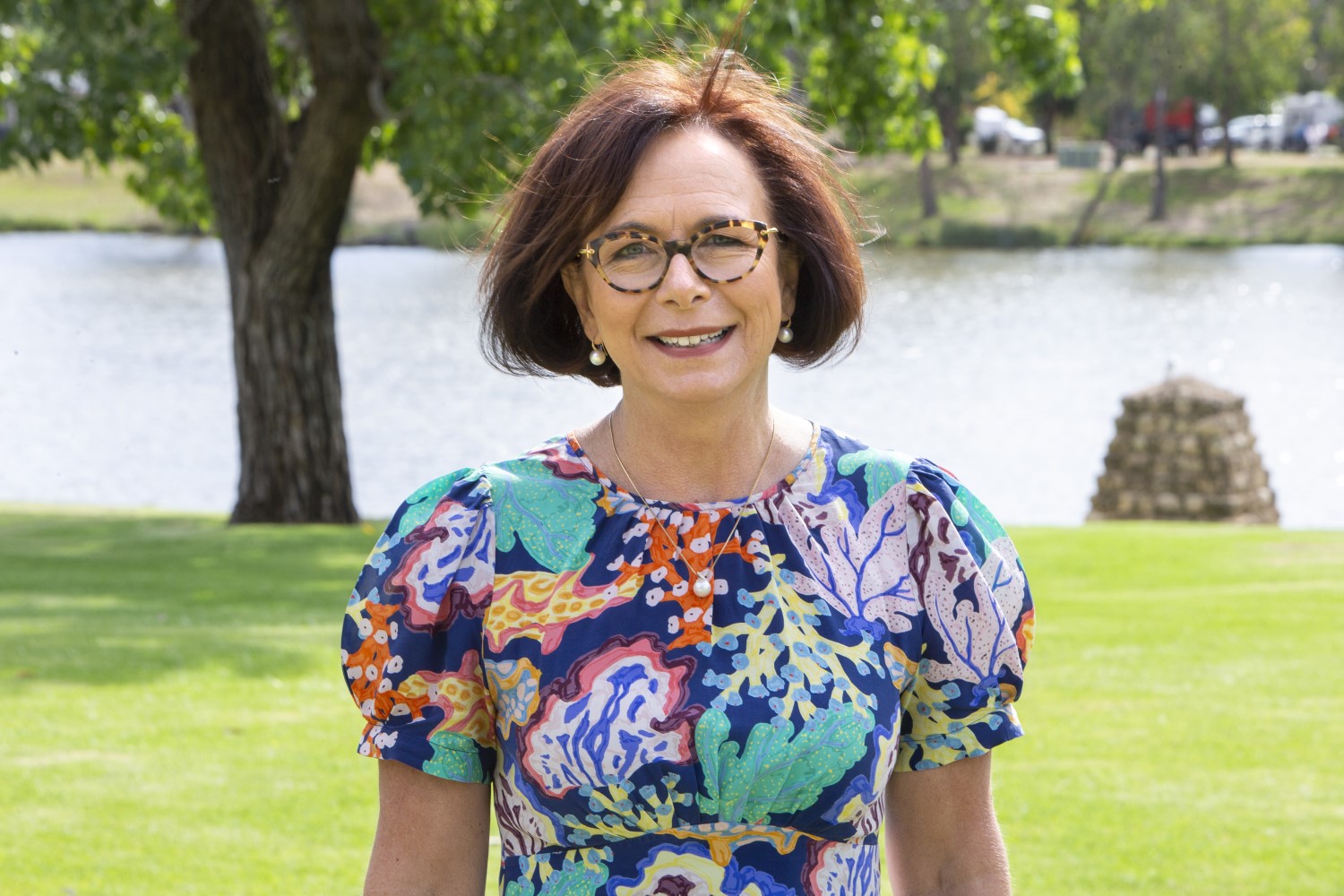
Member for Mallee, Anne Webster, has intensified calls for urgent action on the Albanese Government’s troubled Integrated Assessment Tool (IAT), following new reports that the number of disputed assessments has surged to around 800 cases nationwide.
Dr Webster said the latest reporting confirms that the system is spiralling further out of control—hitting rural and regional Australians hardest.
“This situation is deteriorating, not improving,” Dr Webster said.
“We now have reports of around 800 older Australians challenging their assessments. That is not a minor issue—it is a systemic failure.”
Earlier evidence revealed 414 requests for review between 1 November 2025 and 23 January 2026, with just two resolved in that period.
“The fact that the number of disputes has now reportedly doubled only reinforces what we already knew—this system is not fit for purpose,” Dr Webster said.
Dr Webster directly criticised the Minister for Aged Care and Seniors, Sam Rae, for failing to take responsibility.
“Minister Rae cannot continue to defend a system that is clearly failing older Australians,” she said.
“Instead of acknowledging the problem and fixing it, the Government is doubling down on a tool that is producing inaccurate outcomes and leaving vulnerable people without care.”
Concerns raised during recent Senate Estimates hearings—including questioning from Shadow Minister for Health and Aged Care, Senator Anne Ruston—have highlighted serious doubts about the tool’s accuracy, particularly in assessing allied health needs.
Dr Webster said the IAT is increasingly being described as a “black box” system that overrides professional judgement.
“We are seeing technology-driven decision-making replace clinical expertise,” she said.
“Assessors on the ground can see when something is wrong, but the system limits their ability to fix it. That is an outrageous failure of clinical governance.”
Dr Webster also pointed to growing concern from the sector itself, including Ageing Australia.
Ageing Australia has warned that:
“Accurate and timely assessments are critical to ensuring older Australians receive the care they need, when they need it.”
Dr Webster said this reinforces the seriousness of the current situation.
“When the peak body for aged care providers is warning about the importance of getting assessments right, the Government should be listening,” she said.
Dr Webster said the consequences are particularly severe in rural and regional communities.
“In places like Mallee, people already face long waits, workforce shortages and limited services,” she said.
“When the assessment system gets it wrong, there is often no safety net—people simply go without the care they need.”
She also reiterated concerns about the broader impact on the aged care workforce.
“Assessment errors are damaging morale in a workforce we are already struggling to sustain—especially in regional areas,” Dr Webster said.
Dr Webster is calling on the Government to urgently overhaul the Integrated Assessment Tool, restore clinical oversight, and ensure rural and regional Australians are not left behind.
“Older Australians deserve dignity, fairness and timely care,” she said.
“Right now, this system is failing them—and the Government must act.”