
PRODUCTIVITY COMMISSION EXPOSES THE COST OF LABOR’S RENEWABLES RAILROADING - Media Release
PRODUCTIVITY COMMISSION EXPOSES THE COST OF LABOR’S RENEWABLES RAILROADING
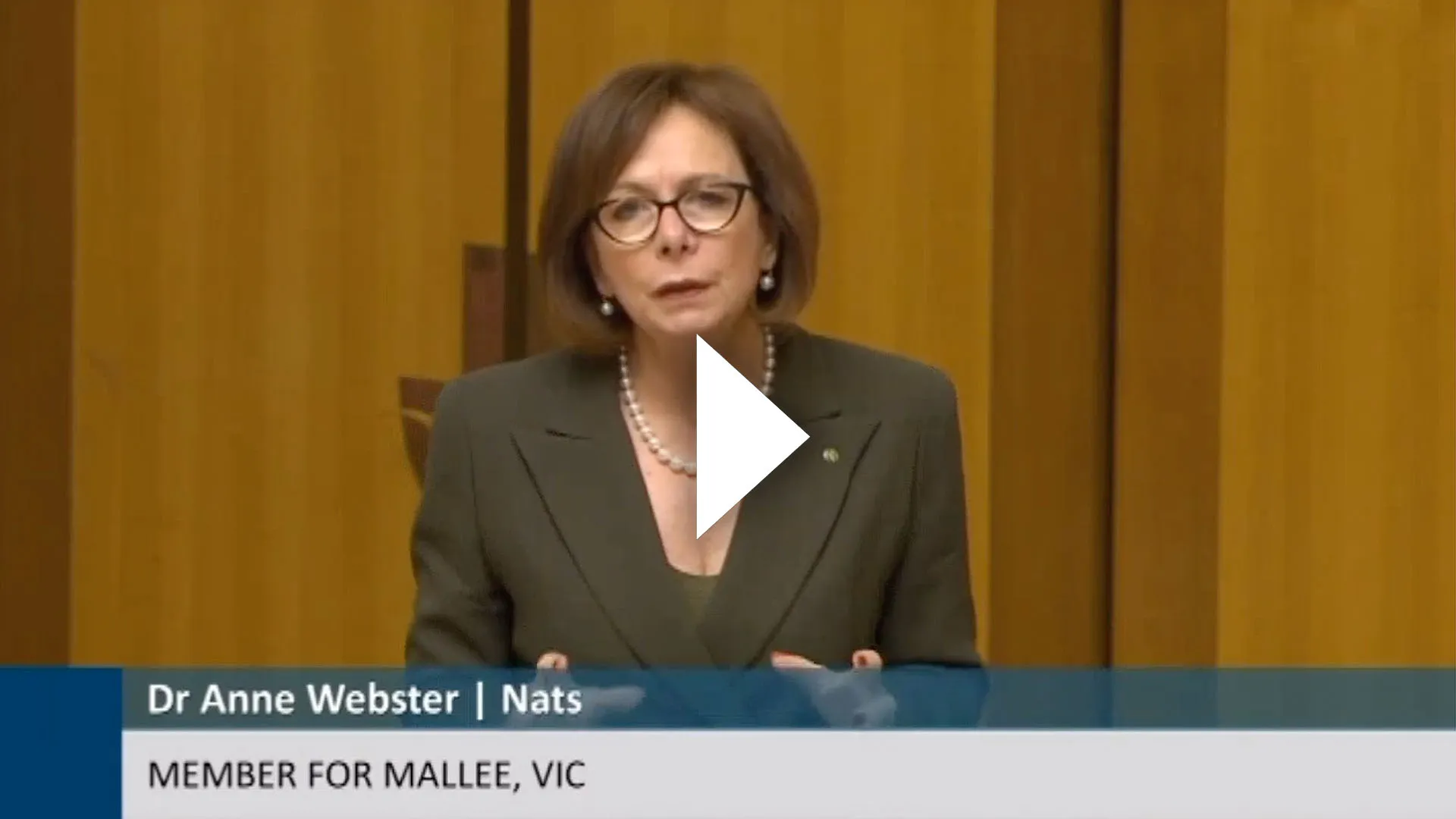
Federal Member for Mallee and Shadow Minister for Regional Health, Dr Anne Webster MP, says the Productivity Commission has confirmed what regional Australians have been warning for years: Labor’s ideological rush to renewables is damaging productivity, driving up power bills, and placing an unfair burden on farming communities.
The Productivity Commission’s June 2026 Productivity Bulletin found that capital investment in Australia’s electricity sector has increased by 126 per cent since 2001-02, yet electricity output has increased by only 14 per cent. Australians are paying more, investing more, and getting less in return.
“The Productivity Commission has effectively confirmed that Australia is pouring billions into the energy system without seeing a commensurate increase in electricity output,” Dr Webster said.
“Regional communities are paying the price for Labor’s renewables-at-any-cost agenda while city-based policymakers lecture farmers about what is supposedly in the national interest.”
The Productivity Commission also acknowledged that the renewable transition is highly capital intensive and requires substantial investment in transmission lines, storage, firming capacity and supporting infrastructure.
However, Dr Webster said the Commission’s analysis remains constrained by the government’s own policy framework.
“The report asks how Australia can meet Labor’s emissions targets more efficiently. It does not ask the more fundamental question: what energy mix would deliver the lowest-cost, most reliable and most productive energy system for Australia?”
“That distinction matters.”
“The Productivity Commission has exposed the productivity problem, but it has done so within a framework that assumes Labor’s renewable targets are fixed. Australians deserve an energy debate that starts with affordability, reliability and productivity, not ideology.”
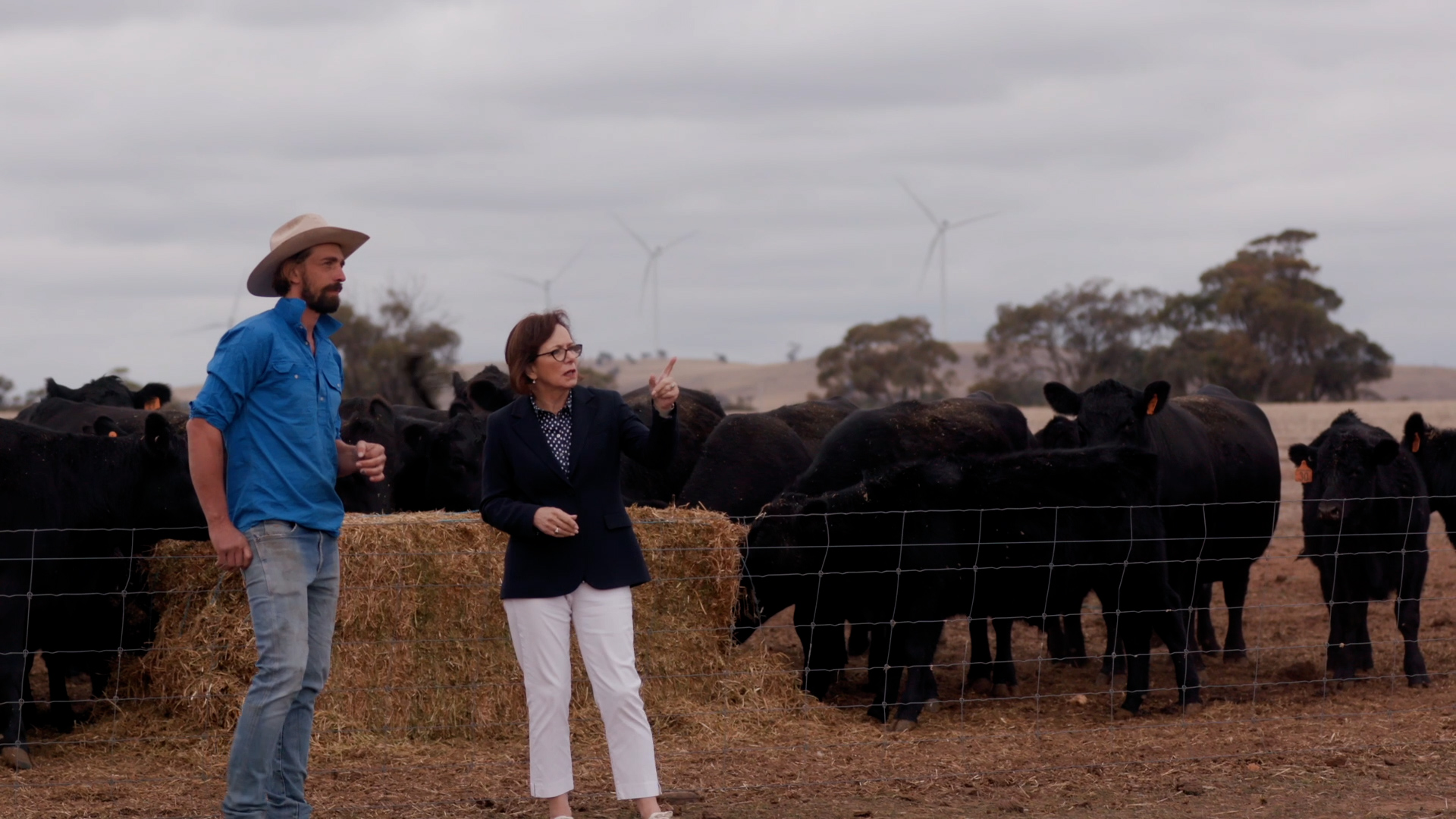
Dr Webster said the consequences are particularly severe across Mallee, where prime agricultural land is increasingly being targeted for industrial-scale renewable developments and transmission corridors.
“Farmers are losing productive land, communities are facing growing social division, and families are watching their electricity bills climb while being told the transition is making life cheaper.”
“Labor promised households power bills would fall by $275. Instead, families have seen electricity costs rise substantially while taxpayers are funding billions in subsidies, transmission projects and renewable infrastructure.”
The Productivity Commission’s findings come as Australia continues to experience weak productivity growth, with Australians working harder while economic output struggles to keep pace.
Dr Webster said overseas experience demonstrates there is another path.
“Countries focused on energy security and productivity are pursuing technology-neutral approaches that utilise a mix of renewables, gas, coal, hydro and nuclear generation according to their circumstances.”
“They are focused on increasing electricity supply, maintaining reliability and lowering costs.”
“Australia should be doing the same.”
“For Mallee, this is about more than energy policy. It is about protecting productive farmland, preserving the right to farm, maintaining regional prosperity and ensuring families and businesses can afford to keep the lights on.”
“Regional Australians should not be expected to sacrifice their land, their productivity and their livelihoods to satisfy a policy framework designed in Canberra.”