
Mallee's creative heritage deserves protection in the AI age - Media Release
Wednesday 25 November 2026
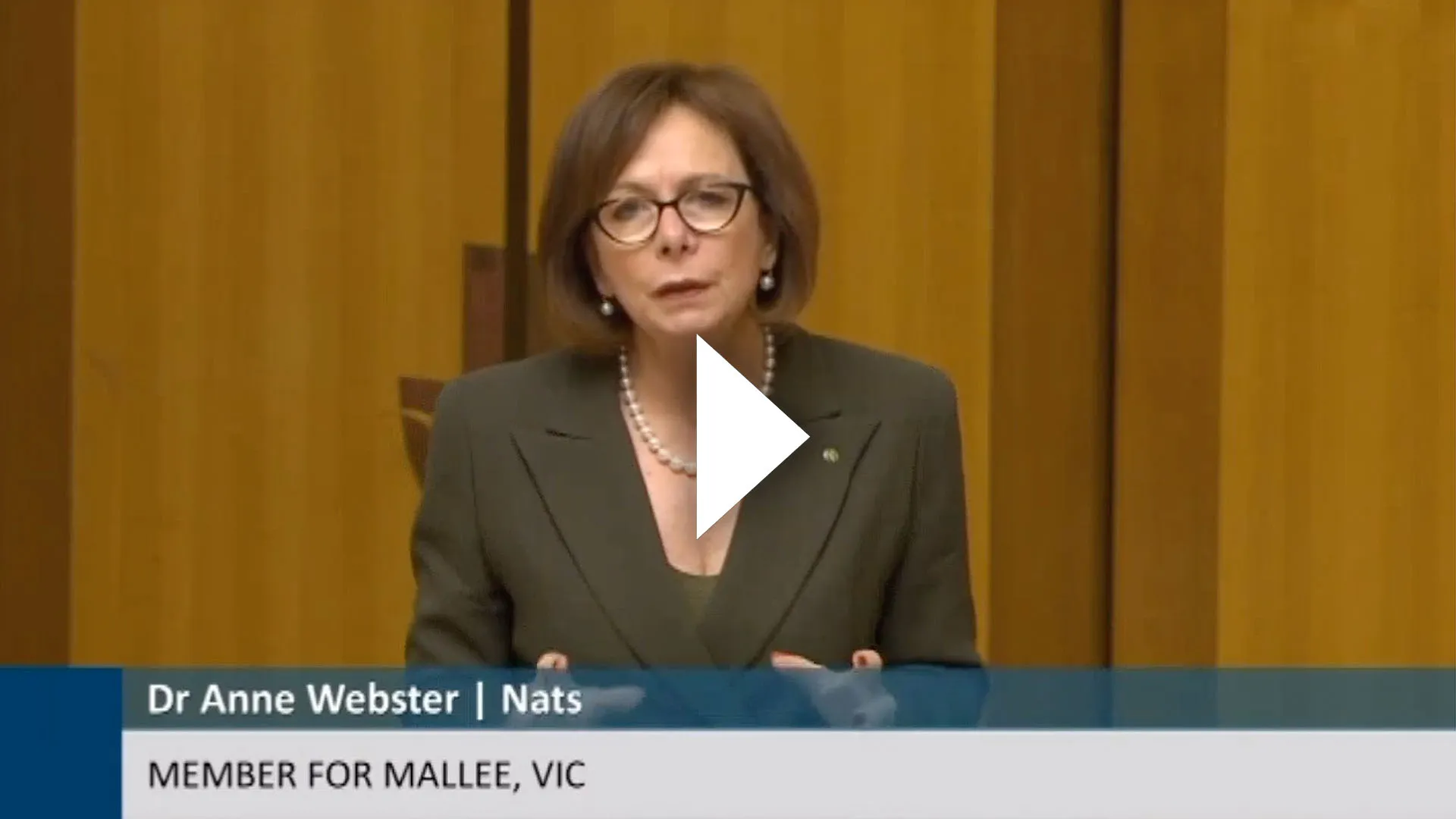
Federal Member for Mallee and Shadow Minister for Regional Communications Dr Anne Webster says Australia's move into the age of artificial intelligence must protect the creative work, journalism and intellectual property built in regional Australia.
“Mallee might be a long way from Australia's big production studios and technology companies, but our region has made an extraordinary contribution to Australian culture.
“From the late Molly Meldrum and John Williamson’s connections with Quambatook, to John Farnham's early career in Cohuna and the formative years of Nick Cave in Warracknabeal, north-western Victoria has nurtured creative talent recognised across Australia and around the world.
“Those great Victorians created highly successful careers. Similarly, the music, stories, videos, art and other works being produced today by musicians, writers, photographers, artists and journalists in Mallee communities are highly valuable.
“The arrival of AI must not render that work valueless – it is not free for AI to hoover up for no reward.”
Dr Webster welcomed the bipartisan approach taken by Parliament's Joint Select Committee on Artificial Intelligence, which has sought to balance the opportunities of AI with protections for Australians.
The Coalition has backed the Committee’s position that copyright holders and creators must receive a better deal, including control over how their work is used and what they are paid for it.
Dr Webster said Australia needed to capitalise on the AI revolution but, as Shadow Minister for Regional Communications, added that innovation does not justify telling an Australian artist, songwriter, photographer or journalist that an offshore corporation’s business model is more important than their intellectual property rights.
Last month, polling commissioned by the Australian Recording Industry Association found 78 per cent of Australians wanted to retain the requirement for AI companies to obtain permission before using Australian creative work, while just 9 per cent wanted that requirement removed.
Three quarters, 74 per cent, said creators themselves should have the right to decide whether their work is used to train AI models.
Dr Webster said the issue was particularly important for Mallee's regional newspapers and media organisations.
“Regional journalism is valuable too. A journalist in Mildura, Swan Hill, Horsham, St Arnaud, Nhill or Maryborough travels, attends the event, makes the phone calls, asks the questions, takes the photograph and establishes the facts,” Dr Webster said.
“An AI company should not simply be able to vacuum up all that hard work and make a commercial return from local businesses’ work.
“Regional newspapers and media are not just another piece of online content. They record our lives, our communities, our stories, holds institutions accountable, and employ local people.”
Dr Webster has already publicly raised the need for an affordable complaints and enforcement pathway for creators who cannot realistically take a multinational technology company to court.
“My concern has always been the songwriter, photographer, author or small publisher who discovers their work has been used cannot afford major legal action,” Dr Webster said.
“I've previously suggested examining an affordable, low-cost pathway where creators could resolve an AI copyright grievance.
“We are elected to grapple with the big issues and we have to get this right - at the cusp of a potential AI boom - so Australian creativity is not collateral damage.”