
Labor’s aged care disaster : 17 die every day waiting for help - Media Release
Saturday 31 October 2026
One year after Labor’s aged care reforms, thousands have died waiting for help, older Australians are stranded in hospitals, and vulnerable regional residents are being assessed over the telephone because the government cannot provide enough assessors.
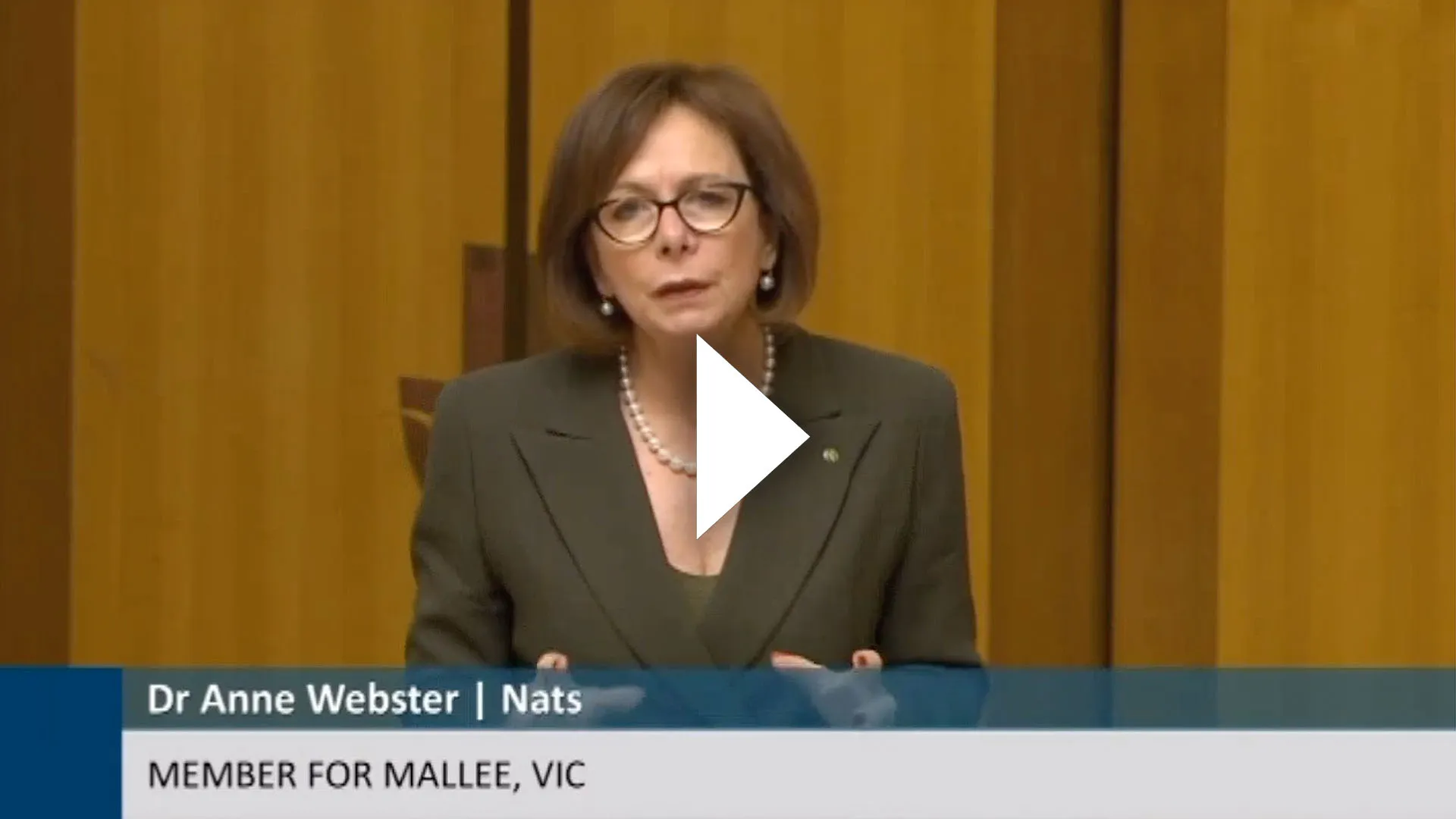
Shadow Minister for Regional Health Dr Anne Webster MP has slammed the Albanese Labor Government’s disastrous aged care reforms following a damning report card from families and advocates.
“Seventeen older Australians died every day last financial year while waiting for home care they had already been approved to receive. That is 6,436 Australians who died waiting for help. How can the Albanese Government possibly defend this?” Dr Webster said.
“These are our parents and grandparents. People who worked hard, paid their taxes and helped build this country. They deserve dignity and care in their later years, not a place on an endless government waiting list.
“Labor promised a once-in-a-generation aged care reform. One year later, it has delivered a once-in-a-generation bureaucratic disaster.”
Families for Aged Care Equity and Support (FACES) has given Labor’s new Support at Home system an overall D grade and an F for safety.
Dr Webster said it was deplorable that Australians are waiting an average of 297 days from applying for help until receiving services.
“Almost ten months. Imagine being 85, frail, struggling to shower, cook or get out of bed, and being told to wait nearly ten months for help,” Dr Webster said.
COTA Australia has also criticised the system, with chief executive Patricia Sparrow saying older Australians should receive affordable Support at Home services within 30 days.
Dr Webster said the evidence of failed telephone assessments in regional Australia was particularly disturbing.
“A federal parliamentary inquiry has heard that older Australians in regional Victoria have been wrongly assessed as ineligible for services because they misunderstood questions asked over the telephone.
“In Victoria's High Country, Murrindindi Shire Council reported these mistakes could have been avoided if assessors had visited people in their homes.
“In neighbouring Mansfield Shire, the inquiry heard that not one face-to-face assessment had occurred during 2025 because of a shortage of local assessors.
“Mount Alexander Shire Council in Castlemaine reported that most assessments were being conducted over the telephone, despite the expectation that assessments should ordinarily take place in person.
“How do you assess someone’s frailty, mobility, living conditions or ability to manage everyday tasks without seeing them?
“How do you assess someone with dementia who may not understand the questions, remember their difficulties or recognise how much help they need?
“Labor cannot even get an assessor through the front door, yet it expects older Australians to trust that it can deliver the care they need.”
Dr Webster said the findings raised serious questions about whether regional Australians were being denied the same standard of assessment as people living in metropolitan areas.
“Regional Australians should not receive second-rate aged care simply because of their postcode.
“The Minister must release the number of face-to-face, telephone and video assessments conducted across metropolitan, regional, rural and remote Australia.
“If Labor has nothing to hide, release the figures.”
Dr Webster said Aged Care Minister Sam Rae and Prime Minister Anthony Albanese must take responsibility.
“The Minister must urgently restore meaningful clinical oversight, ensure vulnerable older Australians receive proper face-to-face assessments and deliver approved care without these extraordinary delays.
“Older Australians do not have ten months to wait for Labor to get its act together.
“They need care now, not another review, another algorithm or another excuse.
“Anthony Albanese and Sam Rae need to stop defending this failing system and start fixing it.
Dr Webster said the Commonwealth Ombudsman’s latest findings exposed an even deeper failure within the system.
The Ombudsman found that the government introduced its automated assessment tool without meaningful risk assessment or adequate safeguards. Assessors could not simply override algorithmic decisions they considered clinically inappropriate, while the department had also failed to adequately verify mandatory clinical qualifications.
“Labor has managed to create a system where a computer can have more authority than the health professional assessing the patient. It beggars belief,” Dr Webster said.
“After the Robodebt Royal Commission, you would think Labor would understand the dangers of automated government decisions without proper human oversight. Yet, here we are again, with a computer influencing decisions about whether frail older Australians receive the care they desperately need.
Dr Webster said Labor’s aged care failures were also placing enormous pressure on Australia’s hospitals.
“Almost 4,000 Australians are reportedly stuck in hospital despite being medically ready for discharge because appropriate care is not available," Dr Webster said.
“That means hospital beds are occupied by people who should be receiving care at home or in residential aged care, while other patients wait for surgery or emergency treatment.
“In regional Australia, where hospital beds, aged care places and health professionals are already stretched, these failures are particularly damaging.