

It isn’t easy being green as solar panels go to waste - Media Release
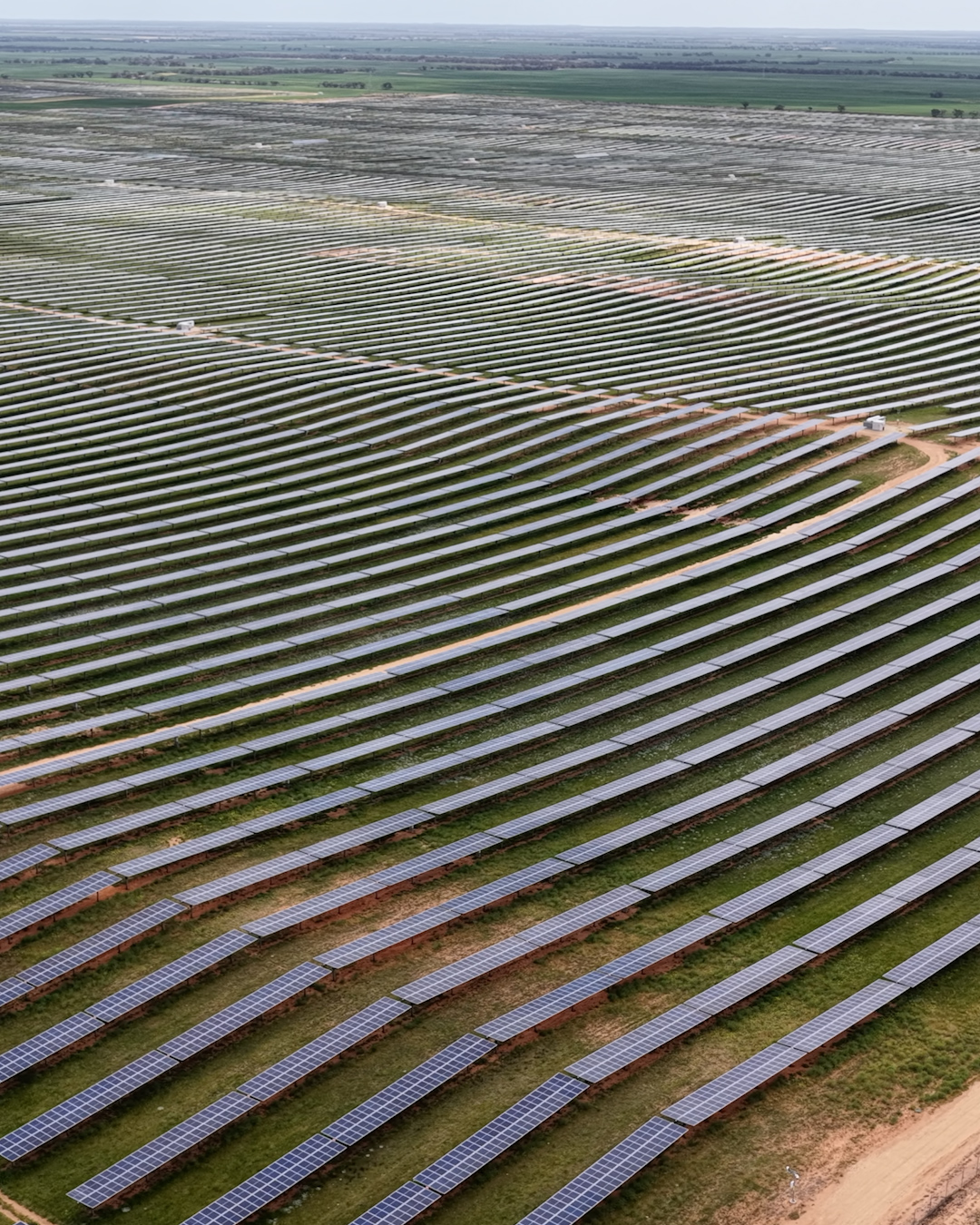
The ‘green dream’ – a proliferation of solar (photovoltaic) panels across Mallee – could turn into a nightmare, Member for Mallee Dr Anne Webster said as the truth is laid bare that the almost 90 per cent of the panels will end up in landfill.
The Commonwealth Department of Climate Change and Energy has warned that panels that reached their end-of-life would end up in landfills. Once there, the panels leach toxic chemicals like lead, cadmium and antimony.
“Former Prime Minister Kevin Rudd referred to the ‘solar energy revolution’ as the first panels were rolled out, and his successor Julia Gillard said it was Australia’s ‘clean energy future’ but we now know those claims were, literally, garbage,” Dr Webster said.
“Only about 10 per cent of decommissioned solar panels are recycled, and in the next 5 years about 20 per cent of panels will reach their end-of-life.
“As we have found with wind turbines, there is no cost-effective recycling process, meaning this ‘renewable’ energy ends up in landfills. Worse still, landowners might find themselves left with the cleanup cost if the original owner that build the installation has moved on or collapsed.”
Livestock farmer impacts
Dr Webster also noted that a Livestock Production Assurance checklist from Meat and Livestock Australia requires producers to confirm they are restricting access from their livestock to:
‘leaking electrical transformers, capacitors, hydraulic equipment, solar panels, wind turbines, coal seam gas structures or coal mine wastes.
The advice further warns of a potential risk of contamination as equipment degrades or reaches end of life.
‘So much for agriculture and renewables being happily able to coexist,’ Dr Webster said.
Solar congestion in Mallee
The West Murray Zone (WMZ) features large solar installations including at Wemen, Karadoc, Yatpool and Kiamal, and has been flagged by AEMO as having the weakest system strength, with more inverter-based generation than the network can securely carry. VicGrid and AEMO have confirmed curtailment (restricting output due to capacity constraints) sits at 13-14 per cent on the latest data, the highest in Victoria.
Persistent curtailment can lead to a premature solar project end-of-life if the economic continuation case deteriorates as curtailment losses exceed revenue.
Final commissioning of the Yatpool Solar Farm was delayed 18 months due to grid congestion.
For congestion reasons, Kiamal Solar Farm’s operator has better positioned by installing a 221-tonne synchronous condenser and battery storage.
Modelling last month shows that Wemen solar farm faced a risk that 24 per cent of their available energy would not reach the grid due to physical constraints and the threat of paying a ‘negative price’ for generating at uneconomic times.
“So the bottom line is, if these solar projects don’t make money and subsidies come to an end, then they face early decommissioning. That means more panels go into landfill,” Dr Webster said.
Solar panels to landfill
Meanwhile Victoria and South Australia have banned sending panels to landfill, but Dr Webster said that wouldn’t stop the panels being sent interstate into rubbish tips.
A recent estimate indicated that Australia’s annual solar panel waste volumes will nearly double over the coming five years, from over 59,000 tonnes in 2025 to over 91,000 in 2030.
“Mallee residents should take heed as the Government continues to talk about ‘renewable’ energy – it is nothing of the sort,” Dr Webster said.
“The hideous cost of ‘clean and green’ energy at the end of its lifespan – not to mention the hideous eyesore they will become if left dormant afterwards – lays bare that the ‘green energy’ revolution has been a very expensive political distraction.
“Australians know the lived experience that renewables are not the cheapest form of electricity, their power bills keep going up, and as solar reaches end-of-life, the chickens are coming home to roost.”