
Interview with Triple J Hack program - Biofuels - Wednesday 15 April 2026

Shadow Minister for Regional Health, Shadow Minister for Regional Communications - Member for Mallee - Transcript - Triple J Hack - Wednesday 15 April 2026
DR ANNE WEBSTER MP
SHADOW MINISTER FOR REGIONAL HEALTH
SHADOW MINISTER FOR REGIONAL COMMUNICATIONS
FEDERAL MEMBER FOR MALLEE
DAIYAN
It's a bizarre situation. We have all the ingredients we need for a thriving local industry.
MARCHESE
On Triple J, it's kind of related - Biofuels. There's a fair bit of talk about them at the moment as this fuel crisis continues. And we're looking for new ways to secure our energy. They can be used in cars, they can be used in planes, and some people reckon we should be using a lot more of them. So, should Australia be producing more biofuels? And exactly what are they? Hack political reporter Evelyn Manfield's been taking a look.
MANFIELD
Up in the Tablelands in far north Queensland, Liam Wallace spends his days harvesting sugarcane.
WALLACE
During the season, so between about May and December, it's pretty flat out, so we're looking at 14 hours a day most days.
MANFIELD
And these days, everyone wants to talk to him about turning it into fuel.
WALLACE
Yeah, it's definitely something everyone's pretty excited for at the moment. To grow sugarcane for ethanol is a lot easier to grow than sugarcane for sugar because we don't have to worry about sugar content within the cane so we can effectively harvest it all year round.
MANFIELD
Okay, before we get too carried away, you might be wondering what even are biofuels? Well, they're made from organic materials like sugarcane, corn and canola. Those crops can turn into biodiesel to run trucks and machinery, sustainable aviation fuel for planes or ethanol which can be blended with petrol.
DAIYAN
We're already using E10. E10, if you're going to the petrol station, that's ethanol mixed with fuel.
MANFIELD
Associate Professor Rahman Daiyan is an energy specialist at the University of New South Wales and reckons biofuels could be a bigger part of the energy mix.
DAIYAN
We can increase that volume percentage.
MANFIELD
And according to the industry body, that could improve how long our fuel reserves last.
FEMALE VOICE
Based on our capacity that we currently have, we could add around 10 days to what we currently have, which is quite substantial.
MANFIELD
They also also say they have the ability to pretty much double ethanol production. Australia actually has a lot going for it when it comes to making biofuels, but we haven't really leant into it.
DAIYAN
We are also exporting a lot of the feedstock that is used for making biofuel to Europe. So, if we kept those sort of feedstocks within Australia, that allows us to really convert this to fuel.
MANFIELD
And that's something that's been annoying a bunch of politicians in Canberra, like Bob Katter.
KATTER
We are the biggest exporters, arguably, of sugar and the biggest exporters of grain amongst the three or four biggest exporters in the world. Guess where you get ethanol from? Grain and sugar.
MANFIELD
That's him speaking in parliament recently.
KATTER
But here we are in a most precarious situation and nothing is being done.
MANFIELD
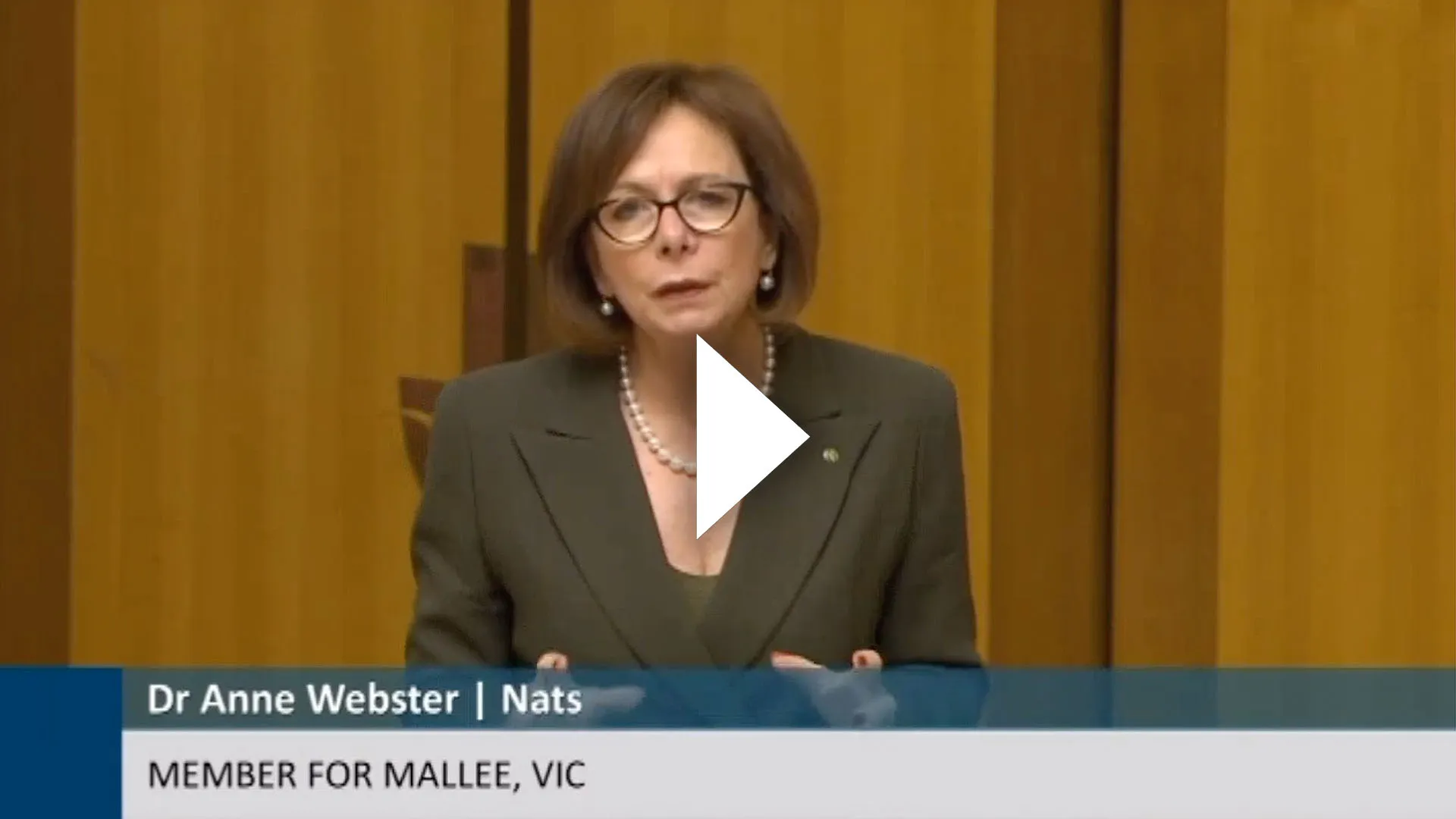
And Nationals MP Anne Webster says it's a big focus in her community in regional Victoria too.
WEBSTER
We grow vast hectares, thousands of hectares of canola and that canola, 70 per cent of it is currently shipped to Europe to turn into biofuel, so biodiesel to be exact.
MANFIELD
The government knows this is a problem.
CHALMERS
If we've learned anything from the last month and a bit, it's that cleaner and cheaper fuels, sovereign capacity, refining, manufacturing, these things are more important than ever.
MANFIELD
That's Treasurer Jim Chalmers the other day, and Transport Minister Catherine King has also complained about it.
KING
The fact that we grow canola here, then we ship it overseas is turn it into sustainable aviation fuel and then buy it back - is nuts.
MANFIELD
So, the government's spending more than a billion dollars to try and develop the industry.
KING
In our view, we should actually be having that low carbon, liquid, renewable diesel. We should be able to generate that here.
MANFIELD
As the minister just mentioned, sustainable aviation fuel, or SAF as they like to call it, is a big part of this conversation because of how much fuel planes use. So, it could play a growing role in energy security and decarbonisation moving forward. But...
DAIYAN
We don't have any sustainable aviation fuel facility in Australia. There is a facility being built in Brisbane. There is another project happening in Melbourne, but this would take a few more years for this to be operational.
MANFIELD
And it's much more expensive, which would likely lead to flights costing more. Associate Professor Rahman Daiyan agrees cost is a barrier for biofuels generally.
DAIYAN
The costs are still high, but given how oil price and every other supply chain shocks are also changing the pricing, biofuel price margin compared to fossil fuel, that gap is decreasing.