
Treasury Laws Amendment
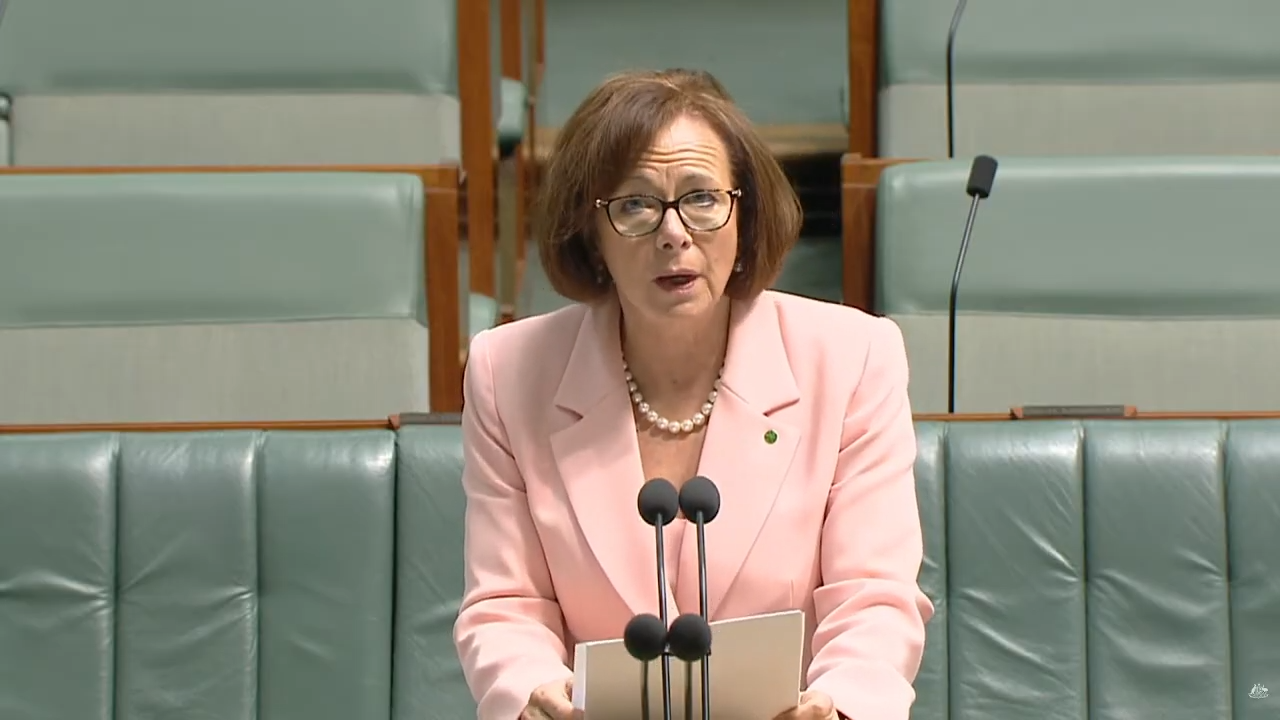
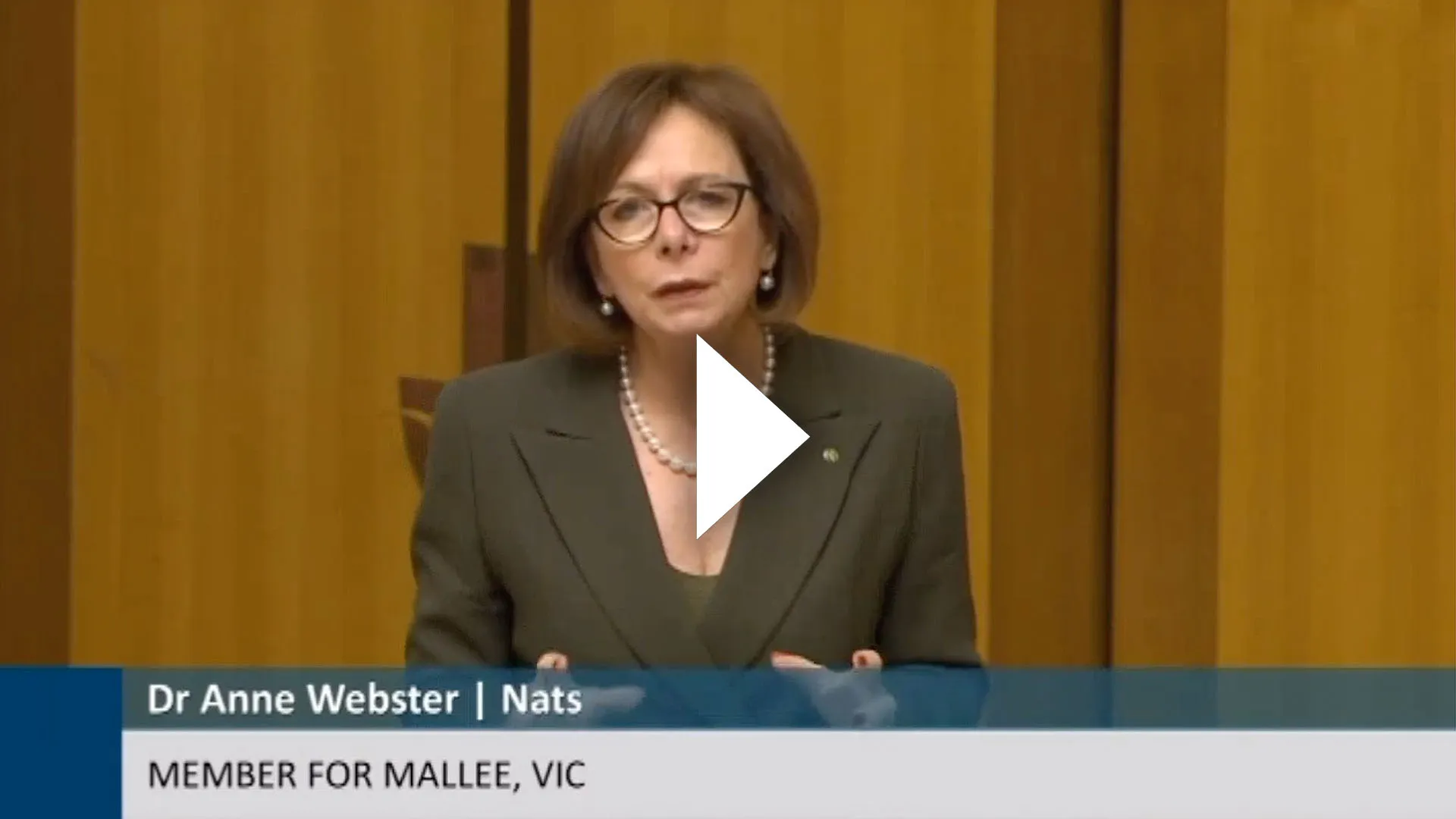
Dr WEBSTER (Mallee) (17:49): Let me take your mind back to just over a year ago on 3 May 2025. I don't know about you, but I remember organising a whole lot of volunteers to stand outside designated polling booths, holding material for members of the public to take, telling them what I, as the member for Mallee, had done and, importantly, was committing to do for them if the coalition were elected in the 2025 election. I'm just checking with the House, because, in many ways, it seems like the election never happened. As far as I remember, parties normally take policy positions to the election, and we all remember the Prime Minister swearing that there would be no changes to CGT, no changes to negative gearing and no changes to trusts.
When I look at the Treasury Laws Amendment (Tax Reform No. 1) Bill 2026, all of those promises are broken. Our Australian democracy relies on parties taking promises to the electorate and implementing them if they're elected, not talking a whole lot of baloney at the election and doing something else when they get a thumping majority.
This bill represents two things. Firstly, it represents the single biggest threat to our Australian democracy because it upends global precedent whereby the party that forms government does a whole range of things it swore it would do in the lead-up to the election. This bill turns 3 May 2025 election into a sham. Labor's election win was a hoax on the Australian people. In the spirit of Winston Churchill, I say that Labor has engaged in terminological inexactitude. They have put on a masterclass in 'factual Jim-nastics'.
We know that Bill Shorten's tax plans—actually taken to an election; credit to him for doing that, as John Howard did with the GST—were comprehensively rejected by the Australian people. Labor lost. So, instead, Labor spread a whole lot of fairy dust at last year's election while they secretly plotted to roll out the Bill Shorten tax agenda. The Treasurer shrugs and smirks and thinks the government can burn off some one-term Labor MPs, burn off some primary vote and do this dirty, dirty deed two years out from a federal election, taking the Australian public for mugs.
Labor thinks the Australian public won't remember this insult. Labor thinks they'll use the supposed rivers of revenue from these measures to advertise on social media and hire the influencers—just as they did in the budget lock-up—to gaslight Australians, saying, 'These broken tax promises are good for you and in your best interests.' It's absolute rubbish.
Secondly, this bill represents the Treasurer drawing to himself ever-increasing power and showing contempt for the parliament, as though the rest of us are just a rubber stamp. The bill contains so many elements for the Treasurer to later decide on at his whim. It makes me wonder whether his next budget saving is to shut down the parliament. Clearly, he doesn't think he needs us. It's little wonder current community sentiment on voting intention is 'a pox on all their houses'. The Albanese Labor government is trashing the reputation of this place and of members of parliament while burning trust on a bonfire of our democracy.
Parliament must reject these bills, and I make it very clear the coalition will be repealing these tax changes when we come to government. They are undemocratic, they are economically destructive and they are just plain wrong. Having run out of money, as the highest spending government in 40 years outside of a recession, Labor is coming after more of yours. Labor's core belief, in its socialist heart, is redistribution of wealth to those who didn't work to create it.
Peter, from south of Horsham in my electorate of Mallee, raises a perfectly valid question as a self-funded retiree. If he was to earn a salary, he would get the $18,400 tax-free threshold, but, by earning money from modest share investments, he will be up for paying a minimum of 30 per cent tax on the very first dollar he earns. There will be widows and widowers who were set up for their retirement, living very modestly indeed in self-funded retirement. They are the people we should be upholding for not being a burden on the taxpayer purse despite having every right to put their hand out for an age pension. Labor is targeting these same older men and women. They are to be taxed from the very first modest cent they rely on to survive. It is another disgrace. Little wonder the Treasurer is adding powers in this bill to have second thoughts—an oopsie, if you like. 'I hadn't thought of that, and, trust me, I'll take your earnings and tax them fairly.' I would strongly suggest that this is simply not true. The Albanese Labor government and their Treasurer are not worthy of anyone's trust.
Speaking of trust, in their politics of envy, Labor have long harboured their dream, their passionate desire, to crack open trusts and get at the money inside them. And here it is, in its gory detail, taxing trusts such as testamentary discretionary trusts. They are much more common than you might think, and underpin a great many small to medium family businesses—arguably, hundreds of thousands—including in my electorate.
Leader of The Nationals Matt Canavan and I met with Peter Knights, an accountant, in his Knights Norfolk accounting offices in St Arnaud this last month. Peter describes the taxes in this bill as 'underhanded' and 'a death tax'. Peter explains:
These assets were previously exempted and so from a family farming point of view, we have to make sure we can take assets through to the next generation, to those most capable of producing for the benefit of everyone else.
When times are tough, traditionally, family farms still show up, but corporate farming doesn't.
He continues:
So this is also now a productivity issue. If we put a tax barrier to those making the transfer of say, a farm, it puts that business at risk. This will put a lot of farms at risk and even food production at risk.
I've already had one family farmer say they'd scaled back their farming activity in recent years, due to Labor's attacks on the profitability of their farm, to what they now call a hobby farm. Now they aren't sure whether, with these new changes, it's worth farming at all.
Amid Treasury's fairytales and fantasy stories told in the budget papers on estimates and assumptions—under the thumb of the Treasurer—are unbelievable revenue projections from these tax measures. If you believe that revenue will materialise, you believe in fairies at the bottom of the garden. Cause and effect, basic physics and economics—the market will respond. Has the government modelled the rush to the age pension, part pension or full pension, to escape Labor's tax-grabbing clutches?
There is a Senate inquiry into this bill, reporting later this month. But, in Labor's contempt for debate and transparency and for this institution, they will no doubt seek to slam this bill through before we have the Senate report. As I said last sitting week, this is more than a lawyers' picnic; lawyers and accountants will be popping the bubbly at all the advice they will have to give, with more compliance and red tape for business. But, more seriously, lawyers and accountants will be feeling morally challenged because they will have farmers and small businesses coming to them saying, 'I can't afford to deal with this.'
The statistics show that, in my home state of Victoria, a huge number of regional small businesses are ready to close their doors. In fact, many in my electorate are closing or have closed. This bill is likely to be the last straw. Businesses will close. They'll just give up. Farmers will say, 'Maybe I will sell to the big corporate who wants my property, or take the money from the foreign owned energy company for wind turbines or solar panels, or take the money from the Victorian government for the transmission line and land access.' Do you now see the cunning masterfulness of this smirking treasurer? Put farmers and small businesses on the edge of the financial cliff so that they just jump into the manufactured ocean of government dependence.
Let's remember that as many as 25 per cent of Australians receive direct welfare payments, and 18 per cent of Australians work in the public sector. That's as much as 43 per cent of Australians that depend on government for their incomes. If you add in all the government subsidies, there would only be a small minority that receive no government payment at all. Yet these are the people Labor has gone after with this bill: the self-funded retirees and the small businesses built by hardworking Australians—families who have worked for generations for long hours to establish what they now have.
The bill confers sweeping powers on the Treasurer on CGT, negative gearing and the working Australians tax offset, where the Treasurer gets the final say.
As shadow minister for regional communications, I have to add that the communications minister has done this as well with the universal outdoor mobile obligation bill, or the UOMO bill—given herself powers to ultimately determine what's in or out, not the parliament. Labor are cunning with marketing, terrible in government. They're not just moving the goalposts; they're putting them on wheels for the Treasurer to move wide enough to ensure enough revenue is going through the big sticks.
These bills grant extraordinary discretionary powers to the Treasurer, perhaps unprecedented in their scale, for the Treasurer to decide so many aspects of these laws—I'm going to coin them collectively as 'Chalmerama', and you might imagine how you'd spell that: what is a 'new residential dwelling', the apportionment method for 'transitional gains', adding CGT asset classes for the 50 per cent discount and exemptions from income support payments from minimum tax. That's interesting given Peter from south of Horsham's concern. If he isn't on any form of income support payment, he'll pay the minimum tax on the first cent he relies on as a self-funded retiree. But, if he's on any support payment, say the bare minimum part pension, he's safe. What a mess!
Another one in the 'Chalmerama' is the exemptions from—
The DEPUTY SPEAKER ( Mr Georganas ): I ask the member to refer to people by their correct titles.
Dr WEBSTER: Another one in the Treasurer's portfolio of decision-making is the exemptions from quarantining for additional dwelling uses or their purposes, or their exclusions as residential dwelling, similarly additional business or enterprise exemptions, entity class exemptions.
But wait, there's more. The Treasurer is also giving himself power to set an alternative method for working out the maximum amount of the working Australians tax offset: the WATO. This is the wage offset of allegedly $250. But, remember, bracket creep will see the average worker pay $2,000 more annually, so that's as useful as Labor's $275 energy bill relief—which basically didn't happen—where your energy bill is now thousands of dollars higher. But the Treasurer wants to shift the goalposts on the WATO as well.
The coalition has promised with our tax back guarantee that we will index the tax brackets and halt bracket creep once and for all, putting more of what you earn in your pocket—a fixed change, not something up to the Treasurer of the day to determine. The Treasurer, today in question time, repeatedly said 'we're bringing back bracket creep' like it's a good thing. It is not. And, in case you missed it, we will repeal all the unmandated tax grabs in this bill. This is an attack on aspiration.
Even for their income tax deduction, announced well before the budget, of $1,000 annually without receipts, I hear that, on average, people might get $250 at best from that measure. It's little wonder the Treasurer wants easily movable goalposts, and it's little wonder small businesses are using AI to photoshop the Prime Minister in as their new 47 per cent business partner.
These are terrible, undemocratic bills that set a shocking historical precedent. The coalition opposes them. We support lower taxes for working Australians and will be making that point in this debate and at the next election.