
Taxpayer Contracts Tied to Union Deals Under New Bill
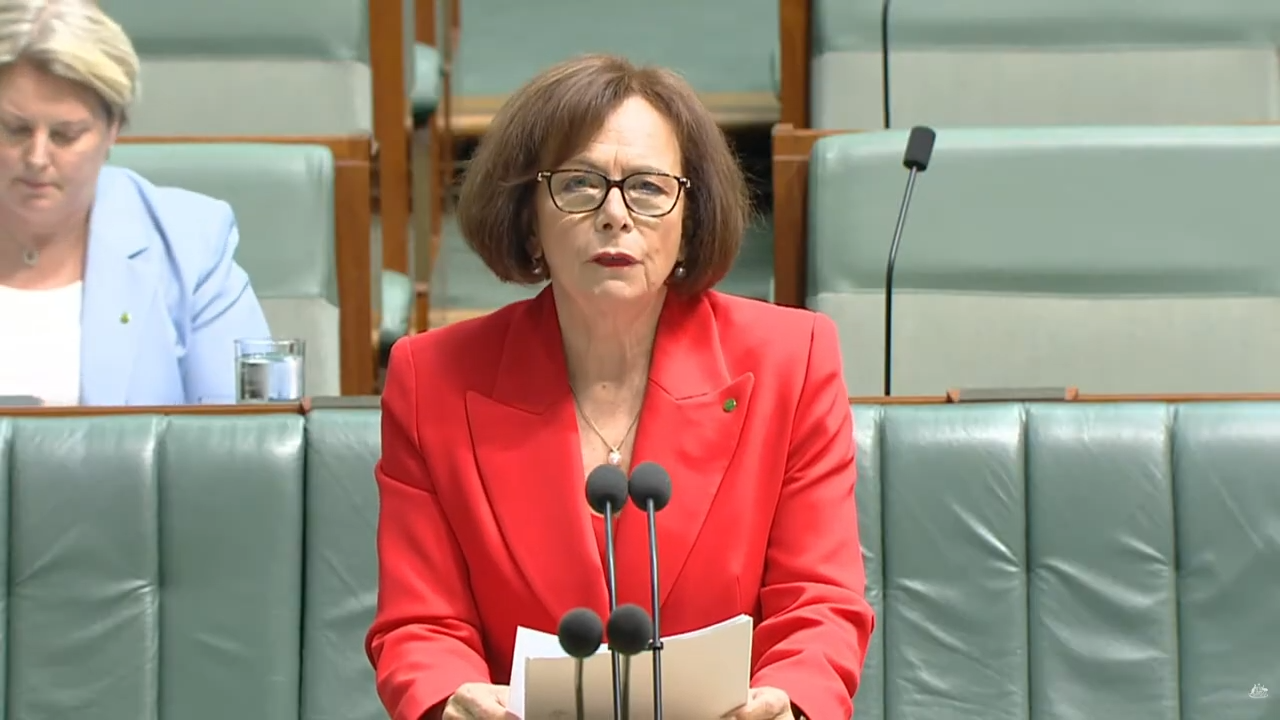
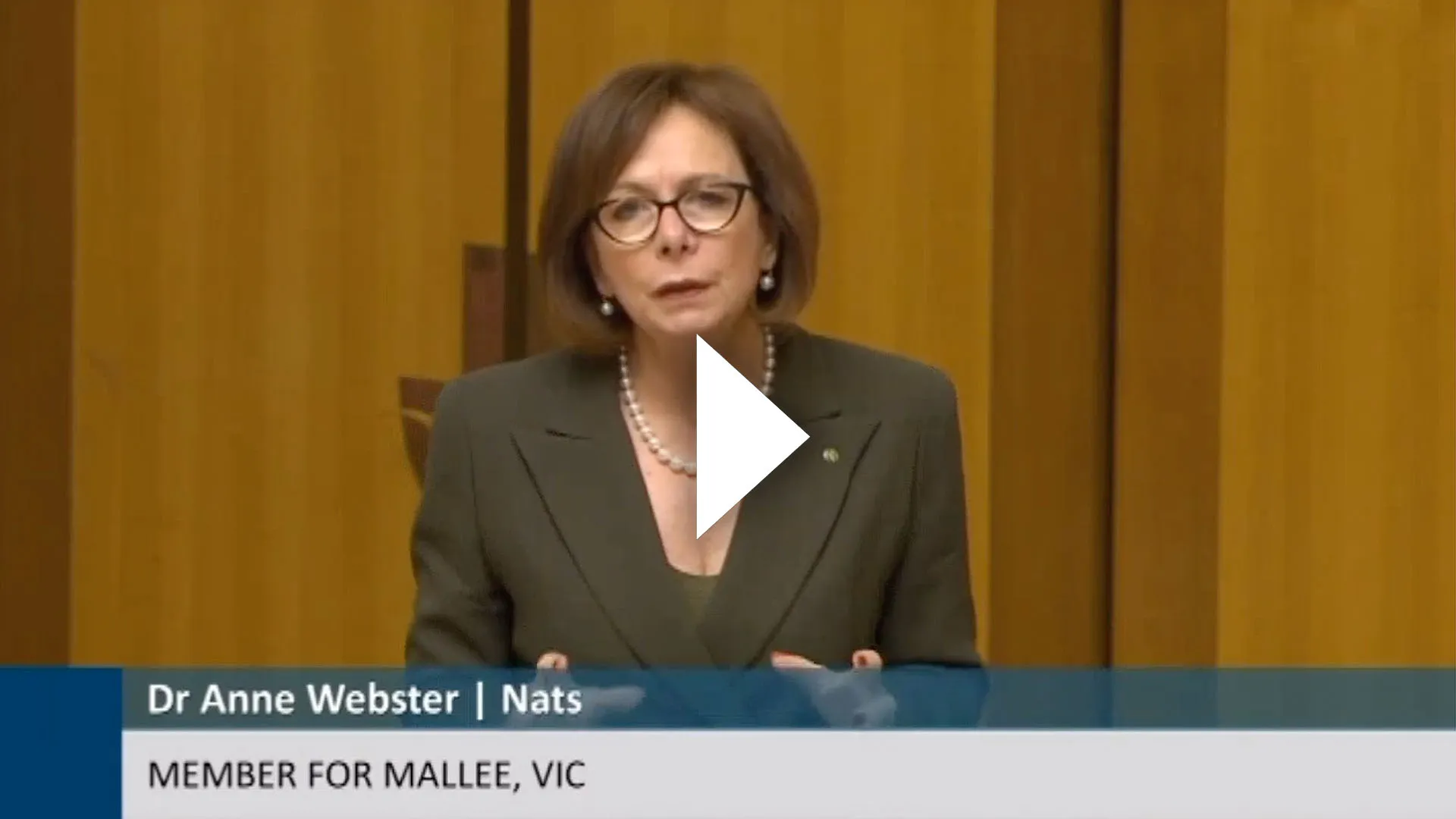
Dr WEBSTER (Mallee) (11:39): At a time when Australia faces clear productivity challenges, this parliament should be asking a simple question of every piece of legislation—will it lift productivity or will it lower it? Productivity is not an abstract economic concept. It is the foundation of higher wages, lower costs, which Australians need during Labor's homegrown cost-of-living crisis, and stronger living standards for Australian families. The procurement provisions in this bill fail the productivity test. Australia's 20-year average labour productivity growth has fallen from 1.8 to 0.8 per cent, more than half. The Reserve Bank of Australia has revised medium-term productivity growth down to 0.7 per cent per year. Under Labor, five of the last seven quarters have seen negative GDP, gross domestic product, per capita. What that means in everyday terms is that, even as the economy struggles to grow, population growth is running too fast—migration, anyone? Living standards are also slipping consequently.
Despite lagging productivity and falling living standards, Labor's plan is to abandon the fight against the inflation dragon, step aside from governing and let unions like the CFMEU take charge. That is what the Albanese government is wanting to do—bring the CFMEU to Canberra, because that has worked so well in Victoria! This bill does two very different things. It is yet another cunning Labor piece of 'wedge-islation', a term that the current prime minister used when he was Leader of the Opposition. And he stated repeatedly that he would not be doing this very thing—wedging a less controversial aspect of the IR law with a highly controversial one. The PM misled Australia again by promising not to wedge the coalition in bringing legislation to the House with tricky double purposes, but here we are.
First, and less controversially, this bill introduces practical reforms to help the Fair Work Commission manage a growing and increasingly complex caseload—fair enough. The coalition does not have a problem with this aspect. The evidence is clear: the Fair Work Commission's workload is projected to increase by over 70 per cent within three years, with 40 to 50 per cent of applications involving AI assisted claims. In that environment, measures to streamline processes, dismiss unmeritorious claims earlier and improve administrative efficiency are sensible reforms. As I say, we in the coalition support them.
But the second part of the bill is entirely different. The bill would allow the Albanese government to preference employers with enterprise agreements in procurement, in grants, in other contracts, preferring businesses that have—get this!—union arrangements. What a surprise! What a surprise to everyone on the coalition benches! 'Nothing to see here.' Let's be honest: this provision has nothing to do with productivity or efficiency; it is a kickback to Labor's union backers. Labor proposes using taxpayer funded procurement to advance the union franchise. In Albanese's socialist dystopia, this is a fundamental—
DEPUTY SPEAKER ( Mr Georganas ): I ask the member to refer to members of this chamber by their correct title.
Yes, Deputy Speaker. In the Albanese Labor government's socialist dystopia, this is a fundamental shift in how government spends taxpayer money. Currently, the law prohibits discrimination against businesses based on whether their employees are covered by particular industrial instruments. This bill changes that. This is Labor doing Labor things.
As one of my many constituent small-business owners said to me earlier this month, 'We don't need this; employers already have agreements with staff.' Labor wants to explicitly empower the Commonwealth to favour businesses with union backed enterprise agreements when allocating contracts and grants. Critically, those preferences will flow through supply chains. So that's Mallee's local construction firms, family owned civil contractors, telecommunications installation and maintenance providers, machinery or service firms, employment service providers. The hammer blow of Labor's cave-in to the unions in Commonwealth procurement will hit regional businesses and communities.
This is not a minor change. It is a structural shift in how taxpayer money is distributed across the economy. When access to government work no longer depends on capability, efficiency or value for money but rather on industrial alignment, guess what? Productivity suffers. Let's imagine what this means for Snowy 2.0, already a disastrous budget blowout—unconscionably over budget. And what do the Prime Minister and the Minister for Climate Change and Energy want to do? They want to bring in the CFMEU. We all know how that will work. Resources are no longer allocated to the most efficient businesses. They are allocated to the ones with unions most embedded in their operations—in other words, the big institutions with sweetheart union deals. That leads directly to higher input costs, reduced competition and lower economic efficiency. When productivity falls, Australian households ultimately pay the price through higher taxes, higher infrastructure costs and higher cost-of-living pressures. You can imagine, with Snowy 2.0, how high electricity bills will become.
This is the very painful lived experience in my home state of Victoria, with the Allan Labor government a puppet for the disgraced CFMEU, with its tentacles all through the big cost blowouts of the Big Build, including the suburban rail loop, adding to taxpayer costs. Remember: the Watson inquiry indicated $15 billion of taxpayer money to additional costs in major projects in Victoria due to the CFMEU, with suggestions that it could be significantly higher.
On Monday, Robert Gottliebsen warned that embedding union driven structures into major infrastructure projects such as Snowy 2.0 could cost as much as $1 trillion in additional network charges for energy consumers. We've seen the energy minister hopping about this morning with regard to the proposed new energy bill supply charges from 1 July. Well, that will pale into insignificance if the CFMEU based costs embedded in Snowy 2.0 are passed on to consumers. The CFMEU's involvement in Snowy 2.0 will significantly increase long-term network costs, driven by cost-plus contracts, governance arrangements and reduced incentives for cost control. That is where bad bills like this one—bad 'wedge-islation'—hit working families through higher costs in their energy bills and everywhere in the economy when they go to the supermarket checkout or try to build a home.
Labor takes Australians for fools, but I can tell you Australians are totally awake to the deceit, failures and incompetence of this Labor government and this Prime Minister. A constituent from Horsham wrote to me recently and said:
… deeply concerned by the serious and ongoing allegations of corruption, fraud, and organised criminal involvement linked to major infrastructure projects under the Big Build, and the role of the CFMEU within that system. The volume of reporting, arrests, and independent findings now in the public domain paints a picture of systemic misconduct that appears to have gone unchecked for years—at enormous cost to taxpayers and to public trust in government. The suggestion that criminal networks were able to operate within publicly funded projects is profoundly alarming.
I agree with him.
Union driven plummeting productivity concerns are not theoretical; industry is raising it right now. The Business Council of Australia's Bran Black warned on 4 June about the proposals in this bill:
This would give unions effective control over where taxpayer money goes. It is being introduced against every lesson the country has learned from the recent CFMEU investigations.
Further, he said:
Public money should go to businesses that can deliver, not businesses that have signed the right union agreement.
I couldn't agree with him more.
We already have excessive government spending driving inflation. Remember the inflation dragon the Treasurer promised to slay? He's given up. He's handed control over to Labor's union masters as if they will be the dragon slayer. But, no, they will only fan the flames from this dragon's mouth. The Australian Chamber of Commerce and Industry went further, stating that 'up to 99 per cent of Australian-employing businesses would be sidelined.'
Around 982,500 of Australia's 994,000 employing businesses do not have enterprise agreements. This exposes Labor's poorly veiled pathological hatred of small business. If this bill passes, the overwhelming majority of Australian businesses, most of them small or family run, will face a major structural disadvantage in securing Commonwealth work.
Small businesses are not marginal participants in the economy. They are its backbone, and they are already under pressure. Recent evidence shows that 64 per cent of businesses say industrial relations changes have made running their businesses harder, and around one-quarter say it's harder to grow or adapt under Labor. At the same time, many businesses are spending over $20,000 a year simply on compliance costs. Productivity depends on small businesses being able to innovate, compete and allocate resources efficiently. Let's not forget the $77 billion toxic taxes this government didn't have the courage to take to an election, which have shocked the innovative and business sectors, as they punish innovation and aspiration. Recent reporting on ongoing investigations into conduct within the construction sector show the CFMEU has used enterprise agreements strategically to generate revenue and control the construction industry.
In many respects, this is not new. Australians have known this for some time, particularly Victorians. The same inquiry has examined financial irregularities, the use of agreements as leverage and broader concerns about CFMEU influence in the sector. These are not historical issues—they are current—yet Labor's approach with this very dark cloud hanging over our construction sector is to enable more of the same. Procurement systems must remain transparent, competitive and grounded in value for money.
There is a consistent theme across Labor's workplace relations agenda. We hear much about secure jobs, bargaining and industrial structure, but we hear far less about productivity. Labor wants to elevate industrial arrangements as a determinant of access to government work without demonstrating how those arrangements improve efficiency, output or value for money. Productivity is not mentioned as the central test, and it ought to be. Productivity is not an academic measure. It determines whether wages can rise sustainably, whether projects can be delivered efficiently and whether households will face higher costs. If productivity weakens, construction costs rise, energy costs increase, infrastructure becomes more expensive and government budgets are stretched.
The problem with this bill is not its entirety; it is its 'wedge-islation' structure, trying to wedge us on this side of the house, putting the arguably good with the demonstrably bad. The Fair Work Commission reforms are necessary, are evidence base and respond to a clear operational problem, but they have been bundled with procurement provisions that introduce significant economic risk, lack clear evidence of benefit and have attracted widespread stakeholder concern. Australia cannot afford to ignore productivity. It is the single most important driver of long-term prosperity. This bill contains measures that will help the Fair Work Commission operate more efficiently—and those measures should pass—but it also contains provisions that risk distorting procurement, reducing competition and embedding higher costs in major projects.
On the central question of if this legislation will lift productivity or lower it, the answer is clear. It won't.