
Regional Australia is being left behind while Labor pours billions into city projects
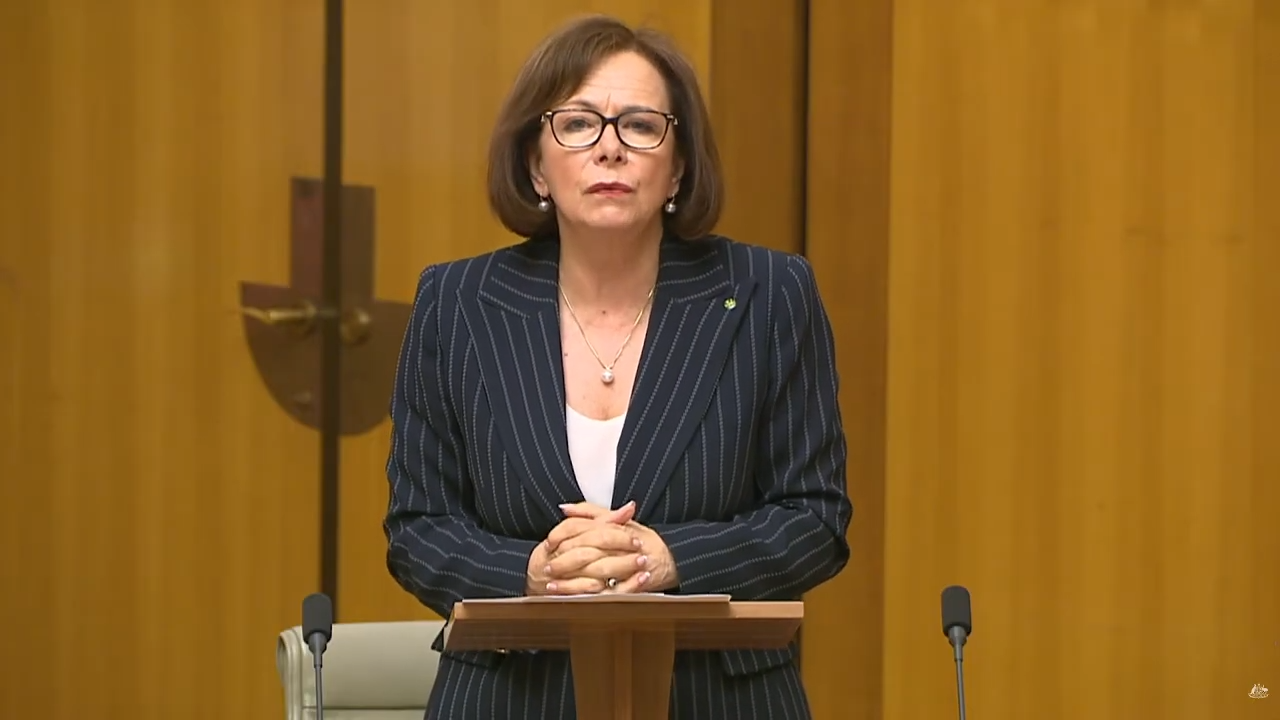
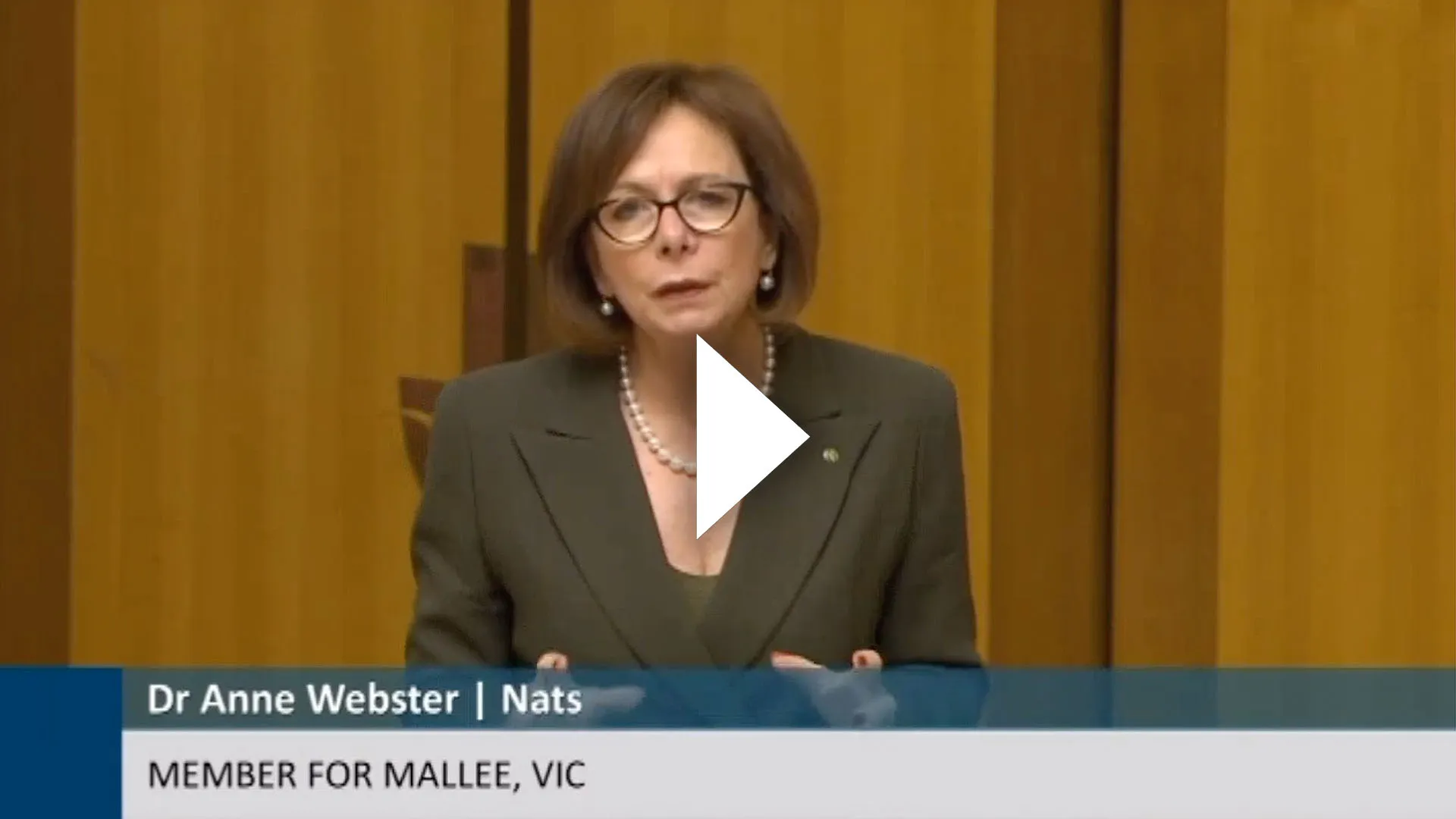
Dr WEBSTER (Mallee) (12:54): I am very pleased for the member for Swan that she has been able to have all of that funding through Thriving Suburbs. I just want to point out that it has actually been taken out of the Growing Regions funding and the Building Better Regions Fund that we installed in our period of time in government, likewise through local communities and infrastructure funding. These are devastating facts for our regional communities. It's nice to see the suburbs are getting that funding.
After four years of inflation under Labor, Australians are still waiting for the $275 energy savings that were promised 97 times. That promise has clearly not been delivered. Instead, energy bills have risen by thousands of dollars. Now Australians are facing what can only be described as budget shock, defined by broken promises and shifting excuses. On budget night, the Treasurer repeatedly pointed to an oil shock as the explanation, but managing economic uncertainty is the fundamental responsibility of the government. Labor was simply not prepared, and the consequences are now evident. The situation resembles a ship heading straight for disaster, just like the Titanic. Labor had previously promised to act on fuel security, but only moved when the Strait of Hormuz closed.
In this budget, the government has reverted to deflection, echoing its earlier response to global conflicts by blaming external factors, instead of accepting responsibility. If this were a school assignment, the Treasurer would receive a failing grade. This budget reflects a clear agenda of wealth redistribution. While the government proceeds confidently, Australians who value aspiration and reward for effort are increasingly worried. With a large parliamentary majority, the Prime Minister and Treasurer appear determined to push through policies that risk alienating marginal seat holders while pursuing what many would describe as a radical economic program, a socialist agenda.
Labor has repeatedly sought to divide Australians. It attempted to do so along racial lines through a referendum. It has presided over deep divisions in religious communities, and it is now creating divisions based on age and postcode through this budget. Despite rhetoric about intergenerational equity, the reality tells a different story. Younger Australians are being locked out of tax arrangements that older generations will continue to retain through grandfathering provisions. At the same time, the government is passing on approximately $1.5 trillion in debt to future generations. Yes, that means you, kids, and your kids, and your kids after them. It raises serious questions about fairness.
The budget also reduces private health insurance rebates for Australians over 65. This is presented as a measure to fund aged care, but the likely outcome is that many older Australians who have contributed taxes and paid for health cover for decades will find private insurance unaffordable. That is what I am being told. That will push them into an already strained public health system. This approach is neither strategic nor responsible. It reflects short-term politics rather than long-term planning.
Aged care remains under severe pressure. Waiting lists continue to grow, with more than 230,000 people on waiting lists for aged care. Tragically, around 5,000 people have died while on that waiting list. The system labelled Support at Home is failing to deliver that support in practice. Meanwhile, the lack of price caps has allowed some providers to charge excessive fees. Steve Wilmann, a physiotherapist from the town of Mildura in my electorate, has told me that he charges $75 for a half-hour consult, but the provider charged his elderly client $215 for those repeated physiotherapy appointments. The client came in to tell him that he was ripping her off. When he looked at the statement, it became very apparent that the provider was ripping off the client. The problem with this is that that lady's package dives very rapidly. She has no money left to continue the physiotherapy that she actually needs. This is rorting, and it is wrong.
In the electorate of Mallee, approximately 23,400 people aged over 65 hold private health insurance, representing around 59 per cent of that age group. Nationwide, about 3.2 million Australians will be affected by changes to the rebate that Labor are bringing in. While the government suggests only a small proportion will drop their coverage, those projections rely on assumptions that many find difficult to accept. Members Health Fund Alliance says, for instance, that the supposed $482 million in savings from this measure will actually trigger a $547 million increase in public hospital costs. Where is the logic? Many older Australians are already reporting that the changes will significantly increase their insurance costs, contradicting official claims by the Treasurer.
The issue of equity is not limited to age. Regional Australians are also being left behind. Inland Rail funding has been cut by more than $4 billion, with the project now expected to terminate at Parkes rather than Brisbane. That's actually quite a gap for anyone who's geographically sensitive. At the same time, more than $3 billion has been allocated to the disgraceful and corrupt Suburban Rail Loop in Victoria.
Programs that once supported regional communities have been slowed, paused or cancelled. There is no funding in this budget for the Local Roads and Community Infrastructure Program, which I mentioned earlier. That program previously provided flexible support to councils, particularly smaller ones with limited revenue bases like many of the ones in Mallee. Communities in areas such as West Wimmera and Yarriambiack relied heavily on this funding for essential infrastructure. Business owners have assessed the cumulative impact of new measures and describe the Prime Minister as effectively becoming a 'silent partner' in their enterprises due to the scale of taxation. This, of course, has been very evident in social memes—quite hilarious, except that it's true. This has raised serious concerns about respect for electoral mandates.
Governments are expected to present their policy intentions clearly during elections. Instead, policies affecting negative gearing, capital gains taxes and trust structures appear to have emerged after the fact, despite prior assurances. Most people would call that broken promises, especially when the Prime Minister has been noted as saying, more than 50 times, that he would not be introducing changes to capital gains tax or to negative gearing. Now, this is flat-out unacceptable. There is no mandate for the Prime Minister and his treasurer to go forward with these budget changes. Earlier proposals to tax unrealised capital gains were defeated, but fresh measures targeting wealth have since appeared. These changes have significant implications, particularly for farmers in my electorate, whose returns are often weighted toward capital gain growth rather than income. As a result, they face disproportionately high impacts, with Australia now among the highest taxing jurisdictions in the world.
The budget also introduces changes affecting trusts, including those established through wills. Discretionary testamentary trusts, commonly used by families and small businesses, will now face new tax burdens if distributions vary from year to year. Approximately 840,000 such trusts exist, with around 350 000 small businesses relying on them. It's no wonder these small-business owners are worried. From 1 July 2028, income distributed through these structures may be taxed at 30 per cent. This has been described by some as a form of death tax, affecting how families manage assets across generations. Of course, you need to die for that discretionary testamentary trust to be implemented.
On housing, the government has adopted elements of the coalition's previous infrastructure proposal but at a reduced scale, committing $2 billion instead of the $5 billion originally proposed. By contrast, the coalition's regional Australia future fund aimed to ensure a fair share of housing infrastructure investment for regional communities—something not clearly replicated in this budget. In response, the coalition's budget in reply outlines a different path. Angus Taylor and Matt Canavan have committed to reversing the new tax measures. We will repeal them.
The coalition has also pledged to abandon net zero policies and halt major transmission lines to nowhere, as the Leader of the Opposition stated last week, such as the VNI West line. At community forums, including events in St Arnaud and Maryborough last week, local farmers with me have expressed strong support for these commitments. Many have described feeling heard and represented, particularly after years of uncertainty and concern over large-scale infrastructure projects. There were over 220 farmers and people in the farming communities who came together at St Arnaud last Thursday to meet with the Leader of the Nationals; the Deputy Leader of the Nationals, Darren Chester; and the leader of the Nationals in Victoria, Danny O'Brien. The community made it very clear there is no social licence for the appalling way the Victorian government has been treating them. The distress in that community has been palpable for years. I have been fighting and standing with them for years. I will continue to do so. When they heard Matt Canavan say that we have scrapped net zero and we will stop VNI West—I have had text after text after text from farmers who are so relieved that finally someone is listening to them and policy will change. Their futures are now back in front of them and in front of their children. They were so worried their futures were being ripped away.
Finally, the issue of bracket creep remains significant. While the government offers modest short-term relief, the cumulative effect of tax settings will see workers paying substantially more over time. On average, workers may lose around $2,000 due to bracket creep, far outweighing the immediate benefit that the Labor government is saying. $250 a year, seriously—I haven't got a maths head to quickly work that out, but that's not many coffees. The coalition are saying we will deal with bracket creep, and we will index income tax. It is genuine reform that small businesses and that people on incomes have been crying out for. In just four years—and it will continue to go on—people will be saving $1,000 a year, and it will improve over time. This pattern of the Labor government reflects a broad concern. Australians are being told they're better off while their lived experience absolutely suggests otherwise.