
National Disability Insurance Scheme Amendment
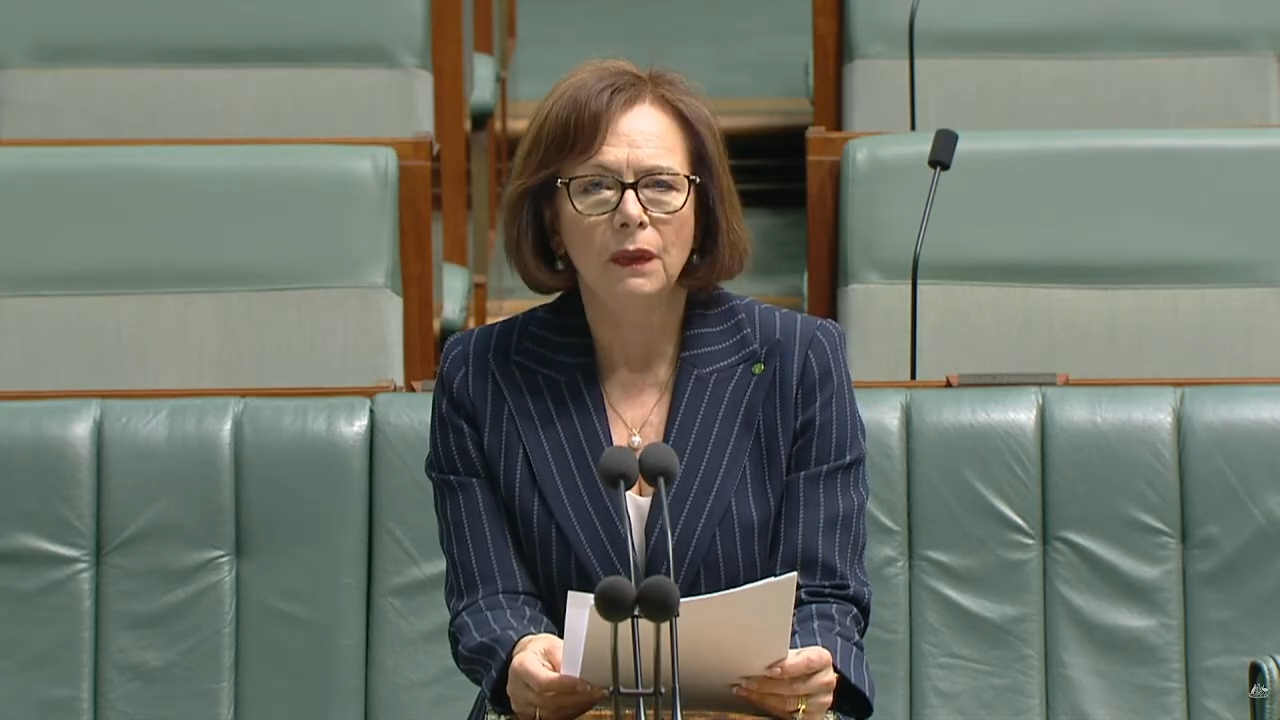
Dr WEBSTER (Mallee) (11:52): I commend the member for Cunningham on her speech and intent. We all, no matter which side of the chamber we are on, want to see better outcomes for those who are living with disability and significant disability.
The coalition supports the NDIS. We support its original intent. We support Australians living with significant and permanent disability having dignity, independence and choice. But if the scheme is to survive it must be sustainable, be accountable and work for the people it was created to serve. Right now, it does not. There are 5,962 NDIS participants in Mallee—thousands of people across Mildura, Swan Hill, Kerang, Cohuna, Horsham and Stawell whose daily lives rely on this parliament getting it right.
As I have said publicly, the NDIS must support those who truly need it, but right now it is not working as it should. We know there is fraud. We know money is being wasted. We know some providers are gaming the system. Yet people living with severe disability are still missing out. Families are still battling the system and participants are still left anxious about whether the supports they rely on now will continue.
Let me be clear: the spending must be reined in. But fixing the NDIS cannot mean making genuine and vulnerable participants pay for the failures of the system and the government in charge. Broad, blunt measures must not hurt the innocent while the guilty continue to exploit the gaps.
In regional Australia, people are anxious because the workforce is already thin and they still do not know who loses and who stays, and whether regional Australians will once again be left behind. People come to my office in desperation because the system is hard, with delays, contradictory advice and decisions that lack transparency and/or are regularly overturned on appeal. For regional Australians there is an added reality. Even when an NDIS plan exists, there may be no provider available locally to deliver it. As shadow minister for regional health, I know that one of the most serious issues facing the NDIS today across all forms of health care in the regions is workforce. In regional Australia, workforce shortages are real. Recruitment is difficult. Retention is difficult. Distances are large. Workers in sometimes complex situations are doing work far beyond what the system properly recognises or funds. This is particularly true in supported independent living.
Tony Dunne, a local disability manager, has been clear that the NDIS is not yet mature enough to fully replace the funding previously provided by the Victorian government. He warned that, as that funding disappears, those clients with often severe disability who share a home are left homeless. Providers are left exposed, workers begin to leave, and the whole system drifts towards instability. Tony also says that, if staff cannot maintain their income, they will leave the sector and take skill and experience with them. In many SIL, supported independent living, settings, especially in regional areas, staff are delivering high-intensity support, medical support, behavioural support and complex daily care. If the funding model does not reflect that reality, the workforce will not hold, and if the workforce does not hold, participants will absolutely pay the price.
I have already raised in this House the case of Noreen, a constituent in her mid 80s whose adult son lives in supported independent living accommodation in my electorate. I've said publicly that Noreen's son Peter, who is in his late 50s, faces eviction because short-term Victorian funding the Andrews government hoped was transitional is now ending and the NDIS isn't picking up the bill for his care in a supported independent living home. This is a serious human consequence of politicking—ageing parents are wondering what happens when they are no longer there. I cannot even imagine the stress.
A Sunraysia mother recently approached me about her 18-year-old son with significant intellectual disability, hearing impairment, severe epilepsy, complex medical needs and behaviours of concern. He is non-verbal. He cannot advocate for himself. His mother is terrified after an NDIA decision which requires him to move into a supported independent living arrangement where, for much of the day, support would be delivered at a one-to-three ratio. But her son requires one-to-one support. He is an absconding risk, with unpredictable seizures and falls, and relies on people who know him well enough to detect subtle signs of distress or deterioration. This mother rightly fears that, in a shared arrangement of one to three, those signs will be missed. This same mother told me that the NDIA's approach feels like a step backwards towards the kind of institutional models the disability sector has worked so hard to leave behind. That should concern every member of this House, and I'm sure that it does. Choice and control must mean something real for people with the highest needs. It must be co-designed with them, not just those with the simplest plans or the strongest voices.
There is also another crossover problem that families in Western Victoria are confronting: the clash between disability support and aged care. Kerry wrote about her sister, who had been trying to transition into aged-care accommodation in Stawell. Due to delays in NDIS assessment, the transition window was missed. Kerry's sister's health deteriorated, and this included a hospitalisation following a stroke presentation. What followed was a cycle of hospital stays, assessments and meetings with no clear resolution. She said she felt she had exhausted every avenue.
There is also a second major issue we must face: rorting and lack of oversight. Ninety-four per cent of providers currently in the NDIS are not registered. That is not sustainable. Local workers tell me some providers inflate costs, some charge excessive travel and some deliver services that simply do not justify the price. An experienced local plan manager wrote to me saying her team manages around 820 participants, carefully scrutinises invoices, reports dodgy providers and often sees little visible action after those reports are made. She said clearly that all providers should be registered and audited regularly. Let me say this clearly. I believe every provider should be registered. If public money is being spent and if vulnerable Australians are involved, there must be proper oversight and proper accountability. This cannot be done in a way that disrupts the current and excellent care providers are delivering.
One Mildura constituent who I think is watching right now, Chris Riordan, who has lived with cerebral palsy all his life, told me he is feeling very stressed about Labor's NDIS plans. Chris understands that changes need to happen, but he's worried about losing his carers, his regular daily visits and personal care—the life he has established through the NDIS. Chris told me some of his current carers are not registered providers, and he's concerned that the system will take them away from him. Chris says the registration process needs to be simpler and more affordable so that good providers can stay in the system while the poor ones are pushed out. We need to eliminate low-value, inappropriate and exploitative services while keeping the people who are doing the right thing, because, for participants, continuity of care matters, trust matters and relationships matter. We cannot design a system that breaks those things in the name of reform. I want to give a shout-out to Chris because he is an extraordinary man bound to a wheelchair. He's in his 50s, he has worked all of his life and he even owns his own home. He is an amazing person who is very popular around Mildura. Hello, Chris.
We cannot design a system that breaks those things in the name of reform. We cannot answer fraud by punishing participants. One constituent from Cohuna warned that people with disability must not become 'collateral damage for the failures of the system'. That is exactly right. If support is taken away from those who genuinely need it, those needs do not disappear. They shift to hospitals, to emergency departments, to mental health services and to families already stretched to breaking point. Raymond's parents, from Swan Hill, wrote to me that many people with disability cannot speak up for themselves and rely on others to defend their dignity and quality of care. They asked whether we are returning to the days of people being out of sight and out of mind. I certainly trust not.
So why are we in this NDIS mess of skyrocketing demand? Research shows that introduction of the NDIS led to a 32 per cent increase in reported autism prevalence and accounted for 47 per cent of new diagnoses since the scheme began. Autism is now the fastest growing cohort in the scheme, and nearly four in five new entrants are on the autism spectrum.
We also cannot ignore the impact of the pandemic, particularly in Daniel Andrews's lockdown capital of the world, Victoria. The pandemic's period worsened developmental vulnerability, mental health and support needs in many children, and that added pressure to already stretched systems. The Australian Early Development Census said:
… the pandemic … had profoundly disruptive indirect effects on children's lives—
and the 2021 data showed higher developmental vulnerability on some domains in the previous years. Murdoch Children's Research Institute said the indirect impacts of the pandemic on children and adolescents were as substantial, if not more substantial, than the direct effects of COVID-19 infection and reported:
… mental health difficulties, and physical health problems … increased across the 2020-2021 lockdown period in Victoria.
The Royal Children's Hospital National Child Health Poll found:
Compared to before the pandemic, overall mental health was more of a problem for 41 per cent of children, anxiety more of a problem for 36 per cent, and connections and relationships more of a problem for 43 per cent of children.
It also found that 49 per cent of children had difficulty adjusting back to school onsite and 52 per cent needed extra help with learning.
I turn now to a practical reform suggestion from the Miracle Babies Foundation and their prebudget proposal to expand their programs NurtureGroup and NurtureLine, including into regional areas. Miracle Babies proposed establishing 20 new NurtureGroups nationally, taking the total to 40 groups across Australia, and said those groups would provide play based, postdischarge support; access to allied health professionals; stronger early intervention referral pathways; reduced wait times; and better access to timely supports. Miracle Babies say that the NurtureGroup program may alleviate future demand for the NDIS by providing early, preventative and family centred support to children with increased developmental risk—including children with a history of prematurity, neonatal illness or a long-term medical condition diagnosis in the first five years of life.
After all, the title of this bill is 'Securing the NDIS for Future Generations'. Doesn't that sound sensible? The Miracle Babies NurtureGroup program delivered more than 33,000 parent-support interactions in 2025 and is embedded in more than 65 neonatal units around the country. I'd like to see more of this program in regional Australia. The NDIS review itself called for more support for children with developmental delays both inside and outside the NDIS. If government is serious about securing the NDIS, it should not only stop the rorts and register providers; it should also strengthen the earlier, community based supports that stop families from reaching deeper crisis in the first place. If we identify developmental concerns earlier, support parents earlier and build stronger referral pathways earlier, we can improve outcomes for children and reduce pressure on the NDIS later.
The DEPUTY SPEAKER ( Dr Freelander ): I thank the member for Mallee. Miracle Babies is based in my electorate, by the way.
Dr WEBSTER: There you go! We need one in Mallee.
The DEPUTY SPEAKER: Indeed. Great organisation.