
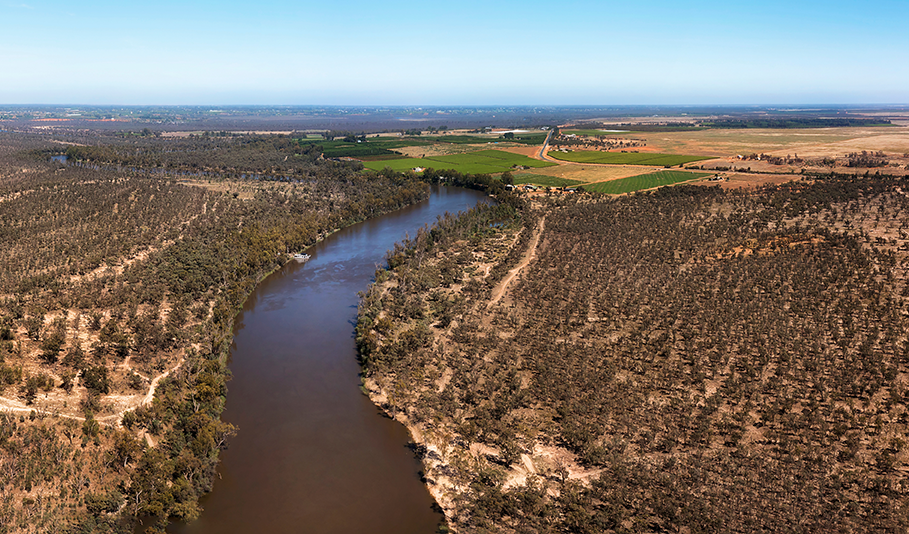
Interview with Matt Stephens, ABC Riverland Breakfast - Transcript - Monday 22 June 2026
Member for Mallee - Transcript - Interview ABC Radio Riverland - Breakfast with Matt Stephens - 22 June 2026
DR ANNE WEBSTER MP
SHADOW MINISTER FOR REGIONAL HEALTH
SHADOW MINISTER FOR REGIONAL COMMUNICATIONS
FEDERAL MEMBER FOR MALLEE
TRANSCRIPT
TOPICS: Murray-Darling Basin Plan, water recovery, environmental works, water efficiency projects, buybacks, irrigators, cost of water, food security, horticulture, water availability, environmental flows, drought, industrial water use.
Matt Stephens
One of the key points of the Murray-Darling Basin Plan has been recovering water for the environment and environmental works. 450 gigalitres has always been the target and has always been a point of contention. I can remember years ago a fiery town meeting at the Greek Hall in Renmark. Last week, the Minister for Environment and Water, Murray Watt, announced that, through water efficiency projects and buybacks, they expect to have 400 gigalitres recovered by December. This news was welcomed by environmental groups, but irrigators who farm in the basin say they're already feeling the impacts. Member for Mallee, Dr. Anne Webster agrees. Anne, good morning.
Webster
Good morning. How are you?
Matt Stephens
Good, thank you. So, what effects are being felt at the moment?
Webster
Look, farmers are struggling with generally everything, including the cost of water, so when you're trying to produce a crop or horticultural harvest, having to pay higher prices, because there's, you know, it's a supply and demand issue. Let's face it, if it's taken out for environmental use, particularly the amount that the Labour government has chosen to pull out, it leaves those who are already doing it tough, whether it's with the input costs of fuel and fertiliser, or export costs, transport costs, the whole thing makes it fairly unviable, and if the prices that they're receiving are particularly low, then it just becomes, you know, a question of do they continue, and I've had several farmers talk to me about the fact that they're literally thinking about pulling out.
Matt Stephens
We've seen a lot of farmers already do that, and if the water is being sold voluntarily for a buy back, which means it isn't being used for farming, what's the harm in putting it back for use of the environment.
Webster
Well, I mean, ultimately you want environmental flows that are healthy, not flooding when it is not seasonally appropriate to do so. And there's been a lot of criticism about that, but you know, I would argue the point, Matt, that voluntarily selling when you push to the wall on a number of factors is not really voluntary.
Matt Stephens
right? Dr. Anne Webster is a federal member for Mallee. You say there that prices are low for the buybacks as well. Do you have evidence of that?
Webster
No, sorry, I wasn't in trying to imply that the prices were low. It's just that when you have less water available, it becomes higher for farmers to be able to access that water,
Matt Stephens
Right. So, what are the options as you see them?
Webster
Stop buybacks. We've always been in favour of efficiency measures, measures, and SDLs, things that don't take more water out of the system, but, and particularly out of the consumptive pool, but rather make it more efficient, so that environmental flows can occur appropriately, and also so that farmers can access the water that they need. There is, you know, a lack of scrutiny about the environmental water flows that I think there are plenty of farmers would like to see the evidence, plenty of community members, frankly, who would like to see the evidence that the environmental flows are achieving what they say it's to achieve,
Matt Stephens
So we know the sentiments in over our side of the border in South Australia, but what are you hearing about on your side in Mallee?
Webster
Well, that's what I'm telling you, is what I'm hearing in Mallee. So it's specifically around horticulture and water being available, and I think the for horticultural use, I think the other threat that is coming, and I'm hearing that from down further in Mallee, in the Wimmera region, when data centres, etc. or mines start to utilise a lot of water as well, because you've got foreign investors who can afford to buy water at prices that local farmers can't, and let's be very clear, our food security is reliant on our farmers being able to achieve crops at a price that keeps them in business, and if that water is going to other purposes, more industrialised purposes, or more environmental purposes, then, that risks our food security into the future, and you know, I understand some people might think that that's, you know, overblowing the case. I don't think it is, and it concerns me that our farmers should be respected, should be given the dignity. That they deserve, they have made our nation great, along with, you know, mining up north and a whole range of other activities, and we want to see that they're able to continue to do this.
Matt Stephens
Dr. Anne Webster is federal member for Mallee. Do you think environmental water is important?
Webster
I think environmental water is important, but I think that expecting environmental flows, man-made, so-called environmental flows to happen when there are droughts goes clearly against the natural responses that would normally happen in a drought. There wouldn't be environmental flows, so I think trying to make something that has not historically been a factor is it's important to keep it in balance and in mind.
Matt Stephens
All right, Dr. Anne Webster, we'll have to leave it there. We're about to run into the news, but I do thank you for your time this morning.